Where Dentists Must Be Listed for AI Search in 2027
Written by Artem Saribekyan, Founder and CEO of Doctor Rank. Twenty years in search marketing for medical practices. Building AI search and AI receptionist systems for practices since ChatGPT launched in late 2022. Last updated November 2026.
We asked ChatGPT and Google AI which boards, directories and networks decide "best cosmetic and implant dentist in my city". Their lists are the floor. What they missed: intent beats insurance, a private practice can beat a DSO, and an unlabeled gallery tells a model nothing.
ChatGPT and Google AI named the boards, registries and directories a dental practice needs. From working with dental practices: why out-of-network cosmetic dentists are not hurt, how private practices beat DSOs in AI search, what to write under every before-and-after, and which review words Google reads.
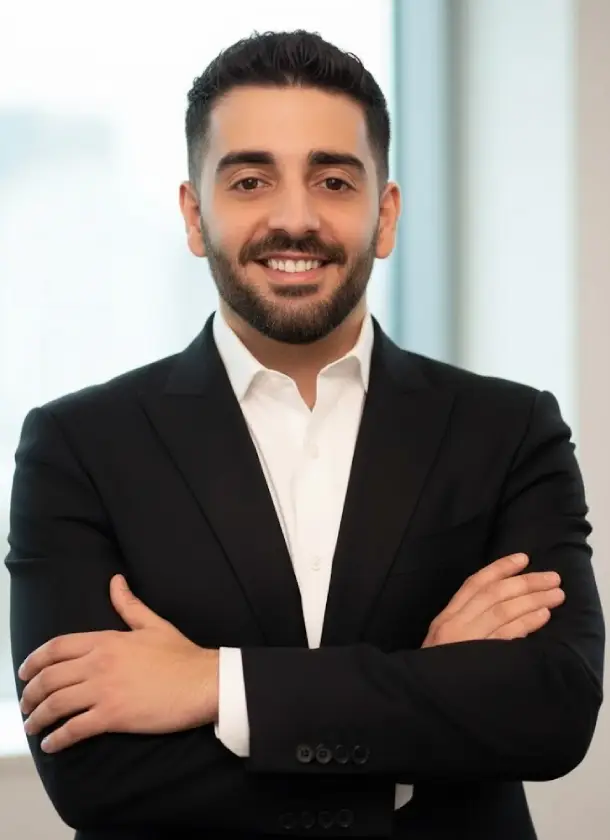
Artem Saribekyan
CEO, Doctor Rank

The short answer
We asked ChatGPT and Google AI where a dental practice has to be listed to be named for "best cosmetic and implant dentist in [City]" in 2026 and 2027. Both answered with the credential layer: the state dental board, the NPI registry, the ADA, the cosmetic and implant academies, the insurance directories. That layer is real and it is the floor. What both left out is what I see deciding the answer for the dental practices we work with: the model reads intent before it reads insurance, a private practice can beat a corporate chain once a person's own AI knows what they value, and a gallery of unlabeled before-and-after photos tells a model nothing.
Below: the exact question we asked, both answers in full, and the four things they missed.
The map pack used to be about review volume. The AI answer is not.
For years a private dental practice got into the local map pack by stacking reviews and collecting the standard directory links. That still matters for the map. It is no longer how a patient finds a cosmetic or implant dentist. They open ChatGPT, Google AI Overviews or Perplexity and ask a specific question: who is the best cosmetic and implant dentist near me. Before any of those systems names a practice, it reads your license, your credentials, your insurance networks, your reviews and your website, and it checks that they agree with each other.
I have done this work for over twenty years and I audit dental practices every week. This piece is for the owner of a cosmetic, implant or multi-specialty practice, including the fee-for-service owner who has been told that not taking insurance will hurt them with AI. It will not, and I will show you why.
The question we asked ChatGPT and Google AI
Both systems got the same prompt, word for word:
Act as an AI search retrieval and entity verification system. When a patient asks for the "best dentist" or "best cosmetic and implant dentist in [City]" in 2026 and 2027, which specific third-party directories, dental boards, insurance networks, and data sources are mandatory for a practice to be cited in your response? Rank the top 10 platforms by trust weight, and explain how AI systems separate top-tier clinical and cosmetic dentists from corporate DSOs or low-trust clinics.
Their answers are below as they gave them, reformatted and nothing else. My read on them follows.
What ChatGPT said
ChatGPT built its list around licensure, specialty boards and the accredited academies, and put the review platforms last.
| Rank | Source | Trust weight it gave |
|---|---|---|
| 1 | State Board of Dentistry | 100 |
| 2 | ADA and recognized specialty certifying boards (prosthodontics, periodontics, oral surgery, endodontics) | 98 |
| 3 | American Academy of Cosmetic Dentistry (AACD) | 96 |
| 4 | American Academy of Implant Dentistry (AAID) / ABOI | 95 |
| 5 | American Board of Prosthodontics | 94 |
| 6 | CMS NPPES / NPI registry | 90 |
| 7 | ADA Find-a-Dentist | 86 |
| 8 | Major dental insurance provider directories (Delta, Cigna, Aetna, MetLife) | 80 |
| 9 | Google Business Profile and Google reviews | 76 |
| 10 | Healthgrades, WebMD, Vitals and Yelp | 65 |
"For a practice positioning itself as one of the best cosmetic and implant dental providers in a particular city, I would place the greatest emphasis on state licensure, individual clinical credentials, AACD accreditation, AAID/ABOI qualifications, relevant prosthodontic or surgical training, and independently corroborated patient outcomes. Directory quantity is secondary to the quality of the evidence."
ChatGPT's closing line, quoted.
What Google AI said
Google AI used a similar credential foundation, ranked the Google Business Profile much higher, and named one thing ChatGPT did not: a corporate group that registers many rotating associates under one corporate NPI reads as a weaker entity than a practice with named doctors.
| Rank | Source | Category | Weight | What it reads there |
|---|---|---|---|---|
| 1 | State dental board licensing portals | Regulatory authority | 100 | Active DDS or DMD license, sedation and anesthesia permits, clean history |
| 2 | NPI registry (NPPES) | Federal database | 98 | Individual Type 1 NPI versus corporate Type 2 NPI, and the taxonomy codes |
| 3 | American Dental Association | Professional association | 94 | Active membership, graduation year, primary practice location |
| 4 | Clinical specialty and cosmetic boards (AACD, AAID, ABOI, ACP) | Credential and fellowship boards | 92 | Separates accredited Fellows and Diplomates from generalists claiming cosmetic expertise |
| 5 | Google Business Profile | Local knowledge graph | 90 | Physical location, practitioner profiles, review velocity, categories |
| 6 | Major PPO insurance directories (Delta Dental, Cigna, MetLife) | Payer networks | 85 | Confirms active credentialing and the physical address |
| 7 | Healthgrades | Healthcare directory | 82 | Procedure experience, patient volume, entity consistency |
| 8 | Zocdoc | Booking and data | 80 | Real-time availability and verified post-visit reviews |
| 9 | WebMD Care / Vitals | Healthcare graph | 75 | Name, address and phone permanence |
| 10 | Yelp / RealSelf / Trustpilot | Consumer sentiment | 68 | Parsed for aesthetics, pricing transparency, billing complaints |
Both answers are right about the verification layer. Anyone with a dental license can put "cosmetic and implant specialist" on a website, so a model checks the state board, the NPI taxonomy and the earned fellowships first. If that were the whole answer, every licensed dentist with a clean record would be named. They are not, and the reasons are below.
What both missed, from working with dental practices
Being out of network does not cost a cosmetic dentist the answer
Both lists rank the PPO directories, Delta, Cigna, MetLife, near the top, and the fee-for-service owners I talk to read that as a threat. In my real-world experience they are not hurt by it. The model reads the intent of the question before it reads anything about insurance. "Dentist near me" means you are probably in some kind of trouble: a filling, a root canal, an extraction, a cavity. That question leans toward general practices and the clinics that take insurance. "Veneers", "implants", "teeth whitening" in the question shifts the read to cosmetic intent, and there the clinical training and the documented work carry the answer.
Two more things follow from that. A practice that does strong general dentistry and strong cosmetic work tends to show up for both kinds of question, because the model hedges: this person may need one or the other, so it shows a practice that covers both. And a strictly cosmetic, fee-for-service practice should not want the general-dentistry clicks anyway. A person looking for a root canal who calls you is a wasted call, and your front desk spends the time explaining what you do not do. Not appearing for that question is a feature. The service page for this is SEO for dentists; the AI side is ChatGPT SEO for dentists.
In AI search the private practice can beat the DSO
In traditional search the corporate groups will keep showing at the top, often with several of their locations in the same results. They have the review counts. In my experience those reviews are often not very good, and the model takes that into account. The next result is usually the smaller practice, and depending on the question the model may prefer it: family-owned, private, boutique, a relaxed environment, one doctor you see every visit. It looks for those signals when the person asking values them.
In AI search it becomes a fair game, for a reason that is easy to miss. Everyone is using their own model, ChatGPT, Gemini, Perplexity, and that model knows a great deal about the person: what they prefer, whether they have a disability, how far they live from you, whether they have a car, which insurance they carry. The recommendation is matched to that person. At that point the question is only how well your website lays out the information a patient needs. A single-owner or boutique practice with clear, honest pages routinely comes ahead of a chain with template pages, and your Google Business Profile has to tell the same story as the site.
The before-and-after gallery that tells a model nothing
Both answers mention clinical portfolios. This is where most dental websites leave the most on the table, and you can quote me on all of it. It is mandatory to stop using stock images on the website. And a before-and-after pair on its own is not proof. Without disclosing the patient's name, describe the case under every pair:
- Approximate age of the patient.
- The problem they came in with, in plain words.
- How long the treatment took and what the process was.
- The outcome, and what the patient said about it.
- A matching review next to the pair, if you have one.
Not a long article under each one. A few specific lines. Here is why it matters. Say you have twenty before-and-after pairs, and the other twenty cosmetic dentists in your city each have twenty, or a hundred. None of them say who the patient was, what problem they came with, what treatment they had, roughly what it cost. To a model they are all the same gallery. The moment yours carries the case, you have put yourself in a different position: the model's patient may be forty years old with the same problem, and your described case matches. In my words to clients, it doubles your chances. A described case next to a smile preview the visitor can run on their own photo is the strongest proof a cosmetic page can carry.
I know this is effort. A dental clinic would not know to do it, and it does not pay off in a week, which makes it hard to see the point. We ask our dental clients for this material; sometimes it comes, sometimes it does not, and we explain why it matters. It takes a good relationship between the practice and the agency. The agency's job is to keep following up until the cases arrive. The practice's job is to provide them.
There is no magic word, but Google does read the words
Owners ask me for the phrases that make a model pick one practice over another. There are none. Too many other factors and platforms are involved; it is a complex mechanism that people like me can only partly see from the outside, after twenty years of watching it. That said, AI does look at specific words, and so does Google. Search for cosmetic veneers and implants near you and Google shows a details box on the profile with what patients praise you for. It pulls real wording clusters out of your reviews: painless, affordable, precise, unhurried, the words patients actually use. Those clusters count.
So my recommendation has not changed: fewer reviews with actual, honest feedback beat a large number of thin ones. Do not ask patients to mention which service they had or to use the word "best". That is the old strategy and it does not work as it used to, because the review has to be genuine. Google's own guidance on getting reviews says the same in its way. Our reputation management work is built on that rule.
Who this is written for
The owner of a private cosmetic, implant or multi-specialty dental practice who hears that AI search favors insurance networks and corporate chains. It favors the credential layer first, and both AIs listed it correctly. After that it reads intent, it reads what your reviews say, it matches the person asking to the practice that fits them, and it reads whether your gallery describes real cases. Those four are yours to control.
Related: the same question asked for dermatology practices, how to claim your practice's ChatGPT profile, and the dental blocks on our client results page.
Questions dental practice owners ask about AI search listings
Will being out of network hurt my cosmetic dental practice in AI search?
In my experience, no. The model reads intent. "Dentist near me" is read as general care, fillings, a root canal, an extraction, and it leans toward general practices and insurance-friendly clinics. "Veneers near me" or "implant dentist in [city]" is read as cosmetic or surgical intent, and training and documented outcomes carry the answer. A fee-for-service practice does not want the root canal calls anyway; they cost your front desk time explaining what you do not do.
How does a private practice beat a DSO in AI search?
In traditional search the DSO usually sits on top with several locations and a very large review count. AI search is a fairer game: the model weighs what those reviews actually say, and it knows what the person asking values. If they want a family-owned, boutique, relaxed practice with one doctor they see every time, the model looks for that, and it finds it in how clearly your website lays out your information.
What should go under each before-and-after photo?
A few lines, no name: the approximate age, the problem the patient came in with, how long it took, what the process was, the outcome and what the patient said. Put a matching review next to it if you have one. Not an article, a described case. And no stock images anywhere on the site.
Should patients mention veneers or "best" in a review?
No. That is the old strategy and it does not work the way it used to, because the review has to be genuine. Google pulls real wording clusters from reviews into the details box, words like painless, affordable, precise, unhurried. Fewer honest reviews with real feedback do more than a pile of scripted ones.
Want to know how ChatGPT and Google describe your practice today?
On a free call I look at how both see your practice right now, where your directories disagree with your site, and what your gallery is missing. Doctor Rank works with one dental practice per city, with the founder on every account. The service itself is on the SEO for dentists page.
Book a free call with ArtemWritten by
Artem Saribekyan
Artem is the CEO and founder of Doctor Rank, a digital marketing agency specializing in local SEO and AI search optimization for private medical practices. Based in New York, Doctor Rank manages SEO and marketing for over 20 medical practices including plastic surgeons, dermatologists, med spas, cosmetic dentists and psychiatrists.
Learn more about our team