How to Get ChatGPT to Recommend Your Medical Practice
To rank on ChatGPT, optimize your Google Business Profile categories, build keyword-rich reviews, and strengthen your website's E-E-A-T. Tested on 20+ medical accounts.
Artem Saribekyan
CEO, Doctor Rank

The Short Answer
To get ChatGPT to recommend your medical practice, run these five steps in order:
- 1
Fix your Google Business Profile. Set the primary category to the provider, not the clinic, and write a description with the doctor's name, credentials, and procedures.
- 2
Build reviews with substance. Reviews that name the doctor, the procedure, and the city carry far more weight than generic "great doctor" praise.
- 3
Add schema markup. Physician, LocalBusiness, and FAQ JSON-LD so AI can parse who you are, where you are, and what you treat.
- 4
Keep citations consistent. The same name, address, and phone across Healthgrades, Zocdoc, Vitals, and your state board.
- 5
Publish E-E-A-T content on a schedule. Service and condition pages that answer the questions patients actually ask.
ChatGPT pulls from these sources to form its recommendations. Below, each step is broken down in full, with the two-week case study where we ran the exact same playbook for a real plastic surgeon.
A few weeks ago, I got a call from one of my plastic surgery clients. She was panicking.
A competitor had reached out to her and said: "I just searched for the best plastic surgeon in your area on ChatGPT. You're not showing up. We can fix that."
So I did what any good agency owner would do. I opened ChatGPT and ran the same search myself. Four times. Different variations. "Best plastic surgeon in [her city]." "Top rated plastic surgeon near [location]." "Who should I see for rhinoplasty in [area]."
She wasn't there. Not once.
I promised her we'd fix it in two weeks. And we did. But here's the thing: most medical practices don't even know this is a problem yet. They're still focused entirely on Google while patients are increasingly asking AI for recommendations.
If you're thinking "I run a clinic, who can help me show up in ChatGPT answers?" you're asking the right question. And I'm going to show you exactly how to do it.
My name is Artem. I'm the CEO of Doctor Rank, and we manage SEO and AI search optimization for over 20 medical practices: plastic surgeons, dermatologists, med spas, medical clinics, dentists, and yes, even lawyers: personal injury, family law, and criminal defense. What I'm about to share isn't theory. It's what we tested, what worked, and what you need to do right now.
Why ChatGPT Recommendations Matter for Medical Practices in 2026
Traditional Google Search
AI-Powered Search
www.skincare-clinic.com
Skin Care Medical Clinic - Queens
Board-certified dermatologists providing comprehensive skin care services. Call today to schedule...
www.nydermatology.com
NY Dermatology Associates | Skin Experts
Treating patients in New York since 2005. Medical and cosmetic dermatology services...
www.healthgrades.com
Top 10 Dermatologists Near You | Ratings
Compare dermatologists in your area. Read patient reviews and book appointments...
Hey, I need a dermatologist near me in Queens
Based on patient reviews and credentials, I recommend:
Adult & Pediatric Dermatology
They're highly rated for both medical and cosmetic dermatology. Would you like me to help you book an appointment?
Let me be direct with you. The way patients find doctors is changing faster than most practices realize.
When someone asks ChatGPT "who is the best dermatologist in Queens" or "recommend a plastic surgeon for mommy makeover in Manhattan," they're not getting a list of 10 blue links. They're getting a direct answer. A recommendation.
And if you're not in that answer, you might as well not exist to that patient.
🔑 Key Insight
This isn't replacing Google. Not yet. But it's adding another layer. Another place where you need to show up. And here's what most agencies won't tell you: the signals that help you rank on ChatGPT overlap significantly with what already works for local SEO.
If you've been doing SEO right, you're already halfway there. If you haven't, you now have two problems instead of one.
How ChatGPT Decides Who to Recommend
ChatGPT doesn't have a "ranking algorithm" the way Google does. It doesn't crawl your website in real-time. Instead, it pulls from a combination of sources to form its recommendations. Understanding this is critical.
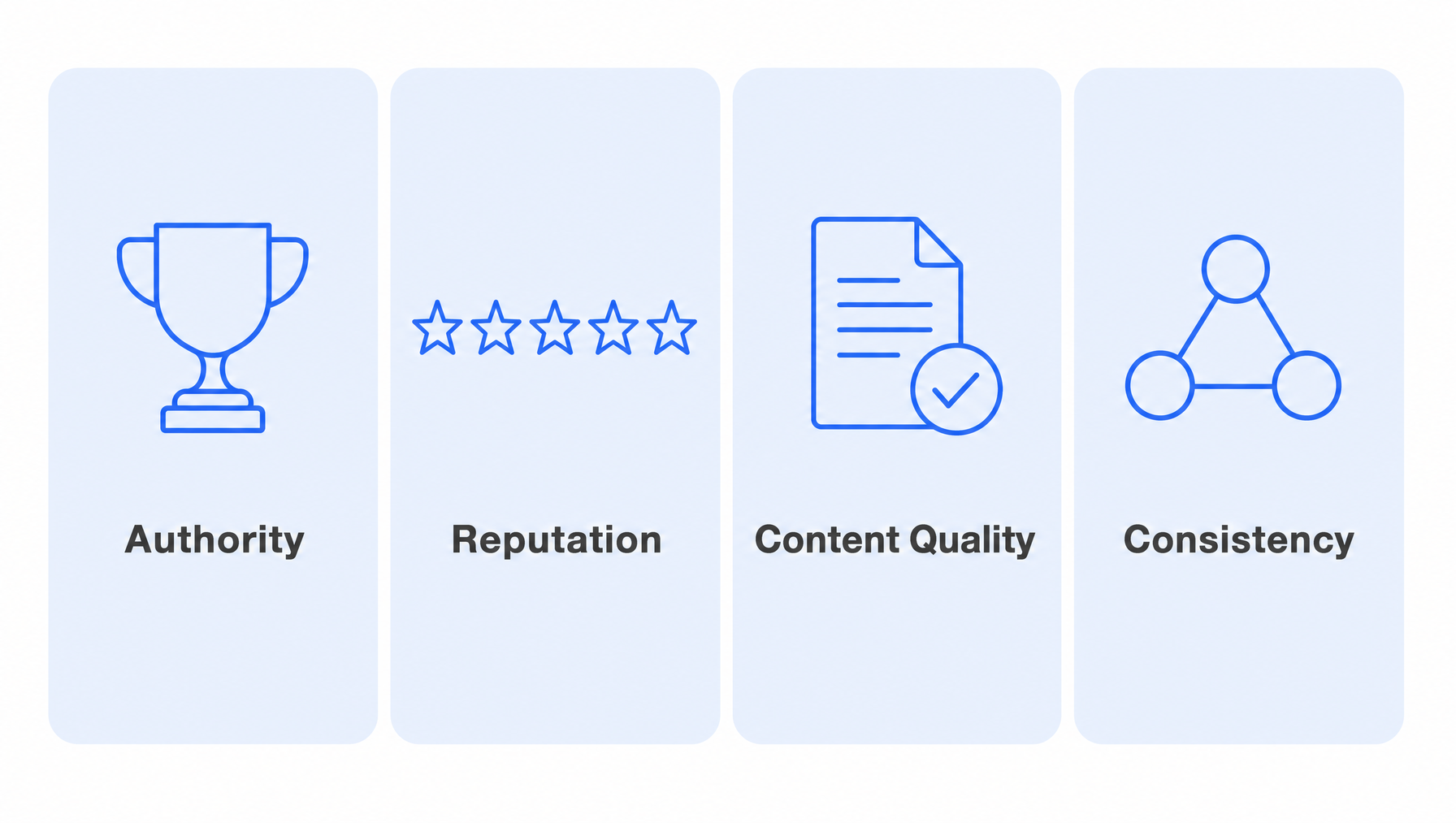
From what we've tested across our client accounts, ChatGPT appears to weight these factors heavily:
1. Your Google Business Profile Information
Your Google Business Profile (what we used to call Google My Business) feeds a massive amount of structured data into the AI ecosystem. Your business name, categories, description, reviews... all of it gets indexed and referenced.
Here's what we found with that plastic surgeon I mentioned. Her primary category was set to "Plastic Surgery Clinic" instead of "Plastic Surgeon." Sounds minor, right? It's not. When someone asks for a plastic surgeon recommendation, ChatGPT is looking for entities that match that specific query. A clinic is not the same as a surgeon in AI's eyes.
We changed her primary category back to "Plastic Surgeon" and updated her business description to explicitly mention her name, credentials, and the types of procedures she specializes in. That was step one.
2. Review Sentiment and Content
This is huge. ChatGPT doesn't just count your reviews. It reads them. The sentiment, the keywords patients use, the specific treatments mentioned. All of this influences how AI perceives your practice.
A review that says "Great doctor, highly recommend" is worth something. But a review that says "Dr. Smith is the best plastic surgeon in Staten Island for rhinoplasty. I traveled from Brooklyn just to see her because everyone recommended her" is worth significantly more.
Why? Because it contains:
- The doctor's name (entity recognition)
- The specialty (plastic surgeon)
- The location (Staten Island, Brooklyn)
- The procedure (rhinoplasty)
- A recommendation signal ("everyone recommended her")
AI can parse all of this. It builds an understanding of who you are, what you do, where you do it, and what people think about you.
3. Website Content and Authority
Your website still matters. A lot. ChatGPT references web content, especially for medical and legal queries (what Google calls YMYL, or Your Money Your Life topics).
For healthcare specifically, AI looks for signals of expertise and trust. This is where E-E-A-T comes in: Experience, Expertise, Authoritativeness, and Trustworthiness. These aren't just Google guidelines anymore. They're how AI evaluates whether your content is worth referencing.
What we've found works:
- Clear, comprehensive service pages that answer the questions patients actually ask
- Doctor bio pages with credentials, board certifications, and specializations
- FAQ sections using the exact language patients use when searching
- Consistent NAP (Name, Address, Phone) across all platforms
4. Citations and Third-Party Mentions
ChatGPT pulls from various sources across the web. If your practice is mentioned on authoritative healthcare directories, local news sites, medical associations, and review platforms like Healthgrades, Vitals, or Zocdoc, that adds to your credibility in AI's eyes.
We build 3 new relevant citations per client per day. Not random directories. Targeted, industry-specific platforms that matter for healthcare providers. This compounds over time and creates a web of authoritative mentions that AI can reference.
The 5-Step Playbook to Get Your Practice Into ChatGPT Answers
This is the exact playbook we run for every practice we take on. Five steps, in order. The first four build the entity ChatGPT recognizes and trusts. The fifth keeps it fresh. Here is the generalized version, and directly after it, the two-week case study where we ran it live.
Set Your Google Business Profile to the Provider Category
Your Google Business Profile is the single largest feed of structured facts about your practice into the AI ecosystem. When a patient asks ChatGPT for a dermatologist or a plastic surgeon, the AI is matching that word to entities that carry the same label. If your primary category is "Dermatology Clinic" and the patient asked for a "dermatologist," you are already a step removed from the answer.
Set the primary category to the provider role you want to be recommended for. Then rewrite the business description to state the doctor's name, credentials, and the specific procedures they perform. Fill in services with full, proper titles. Every field is a fact the AI can pick up and repeat.
Real result: Our plastic surgeon's category was set to "Plastic Surgery Clinic" instead of "Plastic Surgeon." Correcting that one field, plus the description, was the first move that pulled her back into ChatGPT's answers.
Get Reviews That Name the Doctor, the Procedure, and the City
ChatGPT reads the words in your reviews. A review that says "great doctor, highly recommend" confirms you exist. A review that says "Dr. Smith is the best plastic surgeon in Staten Island for rhinoplasty" hands the AI four facts it can match to a patient's question: the name, the specialty, the location, and the procedure.
Build a systematic request process for happy patients, and train your front desk to nudge people to mention what they had done and who did it. Keep a steady flow of recent reviews rather than a burst every few months, and reply to every one, positive or negative. That review text becomes the natural language AI reuses when it describes you.
Real result: We asked our surgeon's practice to request reviews that named specific procedures and the doctor by name. Within the two-week window, that substance started showing up in how ChatGPT summarized her.
Add Physician, LocalBusiness, and FAQ Schema So AI Can Parse You
This is the step most practices skip, and it is the one that separates a clinic AI can read from a clinic AI has to guess about. Schema markup is structured data in your page's HTML that spells out, in a format machines read directly, what your practice is, where it sits, who works there, and what you treat. Without it, ChatGPT infers your details from unstructured text. With it, the AI parses them exactly.
For a medical practice, three JSON-LD types do the heavy lifting:
- Physician (or MedicalBusiness): the provider entity. Carry
name,medicalSpecialty, the services offered, board certifications and credentials, and asameAsarray linking to the doctor's other verified profiles. This is how AI ties one doctor to one specialty. - LocalBusiness (or MedicalClinic): the location entity. Carry the full
name,address,telephone,geocoordinates,openingHours, andareaServed. Every value here must match your Google Business Profile and citations exactly. - FAQPage: mark up your visible questions and answers so ChatGPT can lift a specific answer straight into a response. Each question-and-answer pair is a discrete unit the AI can extract.
One hard rule: your schema must match what a human sees on the page. Marking up a service, address, or FAQ answer that is not visible on the page is the fastest way to lose trust with both Google and the models that learn from it. Add the JSON-LD in the page head or through your site's schema plugin, then validate it before you ship.
Real result: Adding LocalBusiness and Physician markup to our surgeon's site was part of the week-two work. It gave the AI a clean, machine-readable version of the same facts we had just fixed on her profile.
Get Listed on the Healthcare Directories AI Cross-Checks
ChatGPT verifies a practice by cross-referencing it across the web. When your name, address, phone, and services read the same on Healthgrades, Vitals, Zocdoc, WebMD, and your state medical board, the AI gains confidence that you are a real, verified entity. One wrong phone number or an old address does the opposite: it lowers the AI's confidence and quietly drops you from the answer.
Target industry-specific, authoritative directories. Then keep every detail identical to your Google Business Profile and your schema. Consistency across authoritative sources is the whole point.
How we run it: We build 3 new relevant citations per client per day on targeted healthcare platforms. It compounds into a web of consistent, authoritative mentions the AI can lean on.
Publish E-E-A-T Content on a Schedule You Actually Keep
Healthcare is a YMYL topic, so AI leans hard on signals of E-E-A-T: Experience, Expertise, Authoritativeness, and Trustworthiness. The way you earn those signals is by publishing content that answers real patient questions and shows you know your field.
What works for AI visibility:
- Condition guides written in plain language for patients
- Treatment comparison pages that help patients weigh their options
- Doctor bio pages with credentials, board certifications, and specialties
- FAQ sections that use the exact wording patients type into ChatGPT
- Consistent NAP (Name, Address, Phone) across every page and platform
Cadence beats volume. A practice that publishes something solid every couple of weeks builds a stronger entity profile than one that dumps ten articles in a week and then goes quiet.
The Playbook in Action: How We Fixed Our Client's ChatGPT Visibility in Two Weeks
That is the playbook in the abstract. Here is what it looked like on a real account. This wasn't guesswork. We tested and measured.
Changed primary Google Business category from "Plastic Surgery Clinic" to "Plastic Surgeon"
Rewrote the business description to explicitly mention the doctor's name, MD credentials, and key procedures (rhinoplasty, mommy makeover, breast augmentation)
Updated the business name to include "Dr. [Name] MD" where Google guidelines allow
Fixed data inconsistencies on Yelp and other profiles (her Yelp was incorrectly listing "tattoo removal" as the primary category)
Optimized her personal/provider profile on Google (separate from the business profile)
Updated website meta titles and descriptions with location + specialty keywords
Added structured data markup for LocalBusiness and Physician
Encouraged the practice to request reviews mentioning specific procedures and the doctor by name
Two weeks later, I ran the same ChatGPT searches. She was showing up. Not every single time (AI responses have variability) but consistently enough that the threat from that competitor was neutralized.
How to Test If Your Practice Appears in ChatGPT (and Track It Over Time)
Checking once tells you nothing. AI responses vary from run to run, and your data sources update on their own schedule. So you don't run one search, you build a repeatable test and watch it move. Here is the process we use.
1. Build a List of 15 to 20 Patient Prompts
Write out the exact questions a patient would ask when looking for your service in your area. Mix the phrasings, because patients do:
- →"Best [specialty] in [city]"
- →"Top rated [specialty] near [neighborhood]"
- →"Who should I see for [procedure] in [area]?"
- →"Recommend a [specialty] for [condition or procedure] in [city]"
- →"I need a [specialty] in [city], who do you recommend?"
2. Run Each Prompt Several Times
Ask each question a few times and rephrase it. ChatGPT does not return an identical answer every time, so a single miss (or a single hit) tells you almost nothing. For each run, note whether you appear, how prominently you are named, what the AI says about you, and which competitors show up next to you.
3. Log the Results and Repeat Monthly
Keep a simple sheet: the date, the prompt, whether you appeared, your rough position, and the competitors named. Re-run the same list every month. AI recommendations shift as new data is processed, so the trend line across months is what tells you whether your optimization is working.
4. Run the Same List Across Other AI Engines
ChatGPT is one surface. Run the identical prompts through Perplexity, Google's AI Overviews, and Gemini. Each pulls from a slightly different blend of sources, so testing all of them shows you the full picture of your AI visibility and where the gaps are.
The Bigger Picture: This Is Just the Beginning
ChatGPT is just one AI platform. Perplexity is growing. Google's AI Overviews are rolling out. Every major search experience is adding AI-generated answers.
The practices that optimize for this now will have a massive advantage. The ones that wait will be playing catch-up in a year, wondering why their competitors are getting all the new patients.
I've been in healthcare SEO for years. I've managed over 20 accounts across dermatology, plastic surgery, med spas, dental practices, and more. What I can tell you with certainty is this: the fundamentals of good local SEO don't change. They just expand.
The same five steps that put you in Google's local pack are what put you in an AI's answer. Run the playbook once, and you are building visibility everywhere patients are starting to look, including AI search platforms that barely existed two years ago.
Frequently Asked Questions
How long does it take to start showing up on ChatGPT?
We've seen improvements in as little as two weeks after optimizing Google Business Profile categories, descriptions, and review strategies. However, ChatGPT's data sources update periodically, so results can vary. Consistent effort over 4-8 weeks typically produces reliable visibility.
Does ChatGPT use the same ranking factors as Google?
Not exactly, but there's significant overlap. ChatGPT doesn't have a traditional ranking algorithm but pulls from Google Business Profile, reviews, website content, and third-party citations. If you're ranking well on Google local search, you're already optimizing many of the same signals that influence ChatGPT.
Can I pay to show up on ChatGPT like I can with Google Ads?
No. As of now, there's no paid advertising option within ChatGPT. Your visibility is entirely based on organic signals: your online presence, reviews, citations, and content quality. This makes optimization even more important.
Why does ChatGPT sometimes give different answers for the same question?
AI responses have natural variability. ChatGPT considers multiple factors and doesn't always produce identical outputs even for the same query. This is why we test multiple variations and track consistency over time rather than focusing on a single response.
Should I focus on ChatGPT or Google for my medical practice?
Both. Google still drives the majority of patient searches, but AI search is growing rapidly. The good news is that the strategies overlap significantly, optimizing for one helps the other. Think of AI visibility as an expansion of your existing local SEO efforts.
Do reviews really affect ChatGPT recommendations?
Yes. ChatGPT appears to read and analyze the words inside reviews. Reviews that mention your name, specialty, location, and specific procedures carry more weight than generic "great doctor" reviews. The semantic content of your reviews directly influences how AI understands and recommends your practice.
I run a clinic. Who can help me show up in ChatGPT answers?
If you're running a medical clinic and want to start appearing in ChatGPT recommendations, you have two options. First, you can follow the steps outlined in this guide yourself, optimizing your Google Business Profile, building keyword-rich reviews, and strengthening your website's E-E-A-T signals. Second, you can work with a specialized agency like Doctor Rank that focuses specifically on AI search optimization for healthcare providers. We've helped over 20 clinics across dermatology, plastic surgery, med spas, and dental practices show up in Google AI Overviews, ChatGPT, Perplexity, and other AI agents.
Need Help Getting Your Practice Recommended by AI?
At Doctor Rank, we specialize in SEO and AI search optimization specifically for healthcare providers and legal professionals. We only take one client per specialty per market, which means when you work with us, we're not helping your competitors.
If you want to find out where you currently stand on Google AI Overviews, ChatGPT, Perplexity, and other AI agents, and what it would take to start showing up, reach out for a free consultation.
Get a Free AI Visibility Audit
We'll run the searches, show you the data, and tell you exactly what needs to happen. No fluff, no theory. Just what we've tested and what works.
Request Private ConsultationWritten by
Artem Saribekyan
Artem is the CEO and founder of Doctor Rank, a digital marketing agency specializing in local SEO and AI search optimization for healthcare providers and legal professionals. Based in New York, Doctor Rank manages SEO and marketing for over 20 medical practices including plastic surgeons, dermatologists, med spas, dental clinics, and personal injury attorneys.
Learn more about our team