ChatGPT Won't Recommend Your Law Firm? Try This. Thank Me Later.
The 5-minute test that reveals exactly why.
Ask ChatGPT one question to discover why it recommends your competitors instead of you. Learn the exact prompts to reverse-engineer AI recommendations for your law firm.
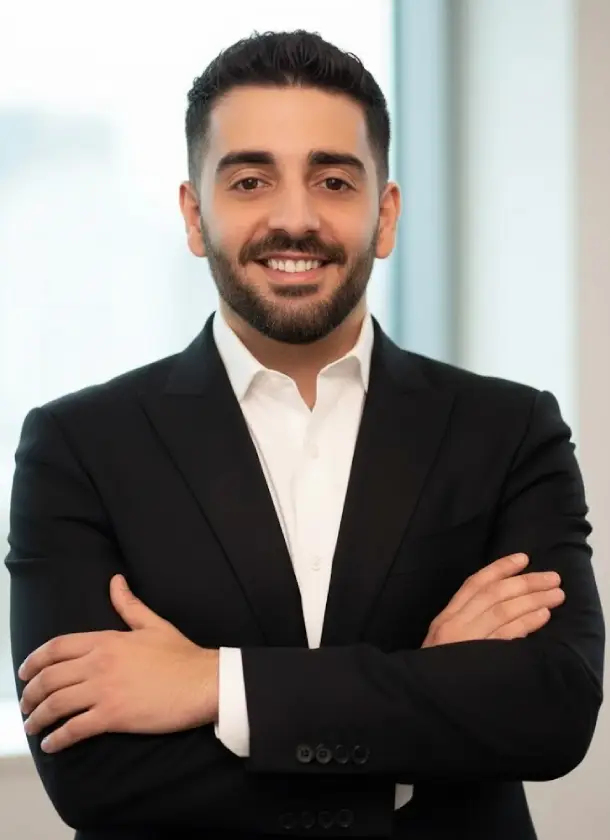
Artem Saribekyan
CEO, Doctor Rank

I named my company Doctor Rank. Ranking is what we did. So it means something when I tell you that ranking is no longer the game.
I am Artem, CEO of Doctor Rank. We handle SEO for lawyers and healthcare providers, and for twenty years search worked one way. You did the SEO, you took the top spot, and Google showed you to everyone. The same three results for every person who typed the same words. Good SEO in, top ranking out. It never cared who was the right fit for the person searching.
Then it changed. Search got personal. Think about how Instagram used to work: more followers, more views. The For You page ended that. Now it does not matter who you follow. Put out the right thing and the algorithm hands it to the right person. AI search is doing the same thing to how people find a lawyer.
I watched it happen with my own law firm clients. Their rankings held and their reviews were strong, but the calls kept slipping.
So I tested ChatGPT. I asked it to recommend a lawyer in a specific city and practice area, and some of my clients were nowhere. Firms that were not even on page one of Google got recommended instead.
So I built a way to reverse-engineer what ChatGPT actually looks at when it picks one firm over another. You can run it yourself in about five minutes. Here is how.
The 5-Minute Test
To find out why ChatGPT does not recommend your law firm:
- 1
Open ChatGPT (free version works) with temporary chat mode enabled.
- 2
Ask it to recommend a lawyer in your practice area and city. Note if you appear.
- 3
Use the follow-up prompt below to reveal exactly which sources ChatGPT used.
- 4
Analyze the gaps - ChatGPT just told you exactly where you need to be listed.
Step 1: Test If ChatGPT Recommends Your Firm
Before you can fix the problem, you need to know if you have one. Open ChatGPT (the free version works fine) and type a prompt like this:
Recommend me a good [practice area] lawyer in [your city].
For example, if you are a personal injury attorney in Brooklyn, you would ask: "Recommend me a good car accident lawyer in Brooklyn."
ChatGPT will typically respond with 5 to 10 law firm recommendations. Read through the list carefully. Is your firm mentioned? If not, that is a clear signal that you have an AI visibility problem.
⚠️ Important: Turn on temporary chat mode in ChatGPT before running this test. This prevents your previous conversations from influencing the results. You want to see what ChatGPT would show a completely new user who has never interacted with it before.
Step 2: Ask ChatGPT to Reveal Its Sources
Here is where it gets interesting. If your firm is not in the recommendations, do not stop there. Ask ChatGPT why it chose those specific firms. Use this exact follow-up prompt:
The Reverse-Engineering Prompt:
What sources exactly, like URLs or platforms, did you base your output on to provide these results to me in that particular order with these particular lawyers and not the others?
This prompt forces ChatGPT to explain its reasoning. It will tell you the exact directories, review platforms, and websites it used to make its decision.
🔍 Real Example
When I ran this test for a Brooklyn personal injury attorney, ChatGPT revealed it based its recommendations on Super Lawyers, Google Business Profile data (including review ratings and counts), directory listings, and the strength of firm websites. It even explained that the order was influenced by review presence, how often firms appeared across multiple platforms, and how clearly each firm communicated its practice area.
How ChatGPT Decides Which Law Firms to Recommend
Based on my testing across dozens of law firms, here are the primary sources ChatGPT relies on:
Legal Directories
Super Lawyers is a major one. ChatGPT treats it as a quality signal because lawyers must pass a nomination and peer review process. Avvo, Justia, and Martindale-Hubbell also influence AI recommendations heavily.
Google Business Profile
ChatGPT pulls data about your star rating, the number of reviews, and importantly, what those reviews actually say. Reviews that mention specific practice areas signal to AI that you handle those types of cases.
Website Content & Structure
ChatGPT checks if your website clearly states what you do and where. "Serving California" is less useful than "representing clients in Los Angeles County, including Beverly Hills, Santa Monica, and Pasadena."
Cross-Platform Consistency
If your firm name is "Smith & Associates" on your website but "Smith and Associates Law Firm" on Google, ChatGPT may not connect them. This fragmentation weakens your authority.
🔑 Why This Matters
More people now ask AI to recommend a lawyer before they ever scroll through Google, and a growing share of searches end right inside an AI answer with no click to anyone. You could be the best lawyer in your city with the top Google ranking, but if AI does not know you exist, you are invisible to a growing share of the people looking for you.
Why This Shift Sticks
This is not going back. The old system was never built for the person searching. It was built for whoever played SEO the best. You wanted the right lawyer and you got the one with the biggest backlink budget. People got burned enough times that they stopped trusting it.
Now they search differently. It used to be one word: "lawyer." Then "best personal injury lawyer near me." Now they hand ChatGPT a whole paragraph. Who they are, what happened, what they need, what matters to them. And the AI weighs all of it. The query got longer because people figured out that a vague search gives a vague answer.
Your future clients are doing this right now. One of my clients, a doctor, told me straight: "I don't use Google anymore. I use ChatGPT for everything." That is a business owner talking, the same kind of person who hires a lawyer. If he searches that way, so do the clients looking for you.
How to Get Your Law Firm Visible in ChatGPT Results

Once ChatGPT tells you its sources, you have a clear action plan:
Check each platform it mentioned. Are you listed? Is your profile complete? Is the information accurate and consistent with your other profiles?
Look at what your competitors are doing. ChatGPT just told you who it recommends. Visit their profiles on Super Lawyers, Avvo, and Google. See what they are doing that you are not.
Fill the gaps. If ChatGPT is pulling from Super Lawyers and you are not there, that is your priority. If your Google reviews do not mention your practice area, start asking satisfied clients to be more specific.
Fix inconsistencies. Make sure your firm name, address, and phone number are exactly the same everywhere. This is called NAP consistency, and it matters more for AI than it ever did for traditional SEO.
Limitations of ChatGPT Law Firm Visibility Testing
To be clear, ChatGPT is honest about the limitations of its recommendations. When I pushed it to explain its methodology, it admitted:
- •The order is not a strict ranking of quality
- •It cannot see win rates or settlement sizes
- •Some excellent lawyers are not visible online because they rely on referrals
- •Online visibility and reviews do not equal legal skill
This is important context. AI recommendations favor lawyers who have optimized their online presence. That is not the same as identifying the best lawyers. But from a marketing perspective, being visible where potential clients are looking is the whole point.
Try This Today
This test takes five minutes and costs nothing. Open ChatGPT right now, ask it to recommend a lawyer in your practice area and city, and see what happens. The information ChatGPT gives you is essentially a roadmap. It tells you exactly which platforms matter and where you need to show up.
Get a Request Private ConsultationIf you want a deeper understanding of how to actually optimize for AI recommendations once you know where the gaps are, I wrote a complete guide: ChatGPT SEO for Lawyers: How to Get Your Law Firm Recommended in 2026. It covers the specific strategies that work.
For law firms that want hands-on help with this, my agency Doctor Rank specializes in AI search optimization for legal professionals. I test these strategies myself, I measure results, and I know what actually moves the needle.
Frequently Asked Questions
Does asking ChatGPT for sources really work?
Why should I use temporary chat mode?
What if ChatGPT gives different results each time?
Is this the same as traditional SEO?
Should I also test Perplexity and Google Gemini?
How long does it take to start appearing in AI recommendations?
How do I optimize my law firm for ChatGPT search results?
Related Reading
If your law firm is not appearing in ChatGPT or Perplexity AI results, the fix involves strengthening your presence across legal directories, building authoritative content on your website, and earning mentions on trusted legal publications. Our SEO services for criminal defense lawyers, family lawyers, and personal injury attorneys include AI search optimization as standard.
Want AI Search Optimization For Your Law Firm Done Right?
If you are reading this because the last agency you hired did not deliver, you are not alone. Almost every law firm I take on had fired one before me. They paid for rankings while the phone stayed quiet. I work the other way. I get you in front of the person who is actually looking for you, on Google, in Google AI Overviews, and on Perplexity. We manage SEO for law firms across personal injury, family law, and criminal defense, and AI search optimization for law firms is built in. If that is what you want, let's talk.
Get a Request a CallbackWritten by
Artem Saribekyan
Artem is the CEO and founder of Doctor Rank, a digital marketing agency specializing in local SEO and AI search optimization for healthcare providers and legal professionals. Based in New York, Doctor Rank manages SEO for over 20 accounts including personal injury attorneys, family lawyers, criminal defense attorneys, plastic surgeons, dermatologists, and dental practices.
Learn more about our team