
 Policy facts from our own advertiser account
Can a Medical Practice Advertise on ChatGPT?
Reviewed by Artem Saribekyan, Founder of DoctorRank | Veteran SEO Specialist, 20+ Years of Experience | SEO for Private Medical Practices Since 2005 | Last Updated: November 2026
The short version: only with OpenAI's approval, and most practices do not have it yet. OpenAI treats healthcare and medicine as a restricted category, approved advertisers only, and during the current test period most medical practices are excluded until approved. Even an approved ad never appears in the conversations ChatGPT flags as sensitive, which covers much of what patients ask. We hold our own ChatGPT ads account as an onboarded OpenAI advertiser, and this page explains what we learned from inside the platform.
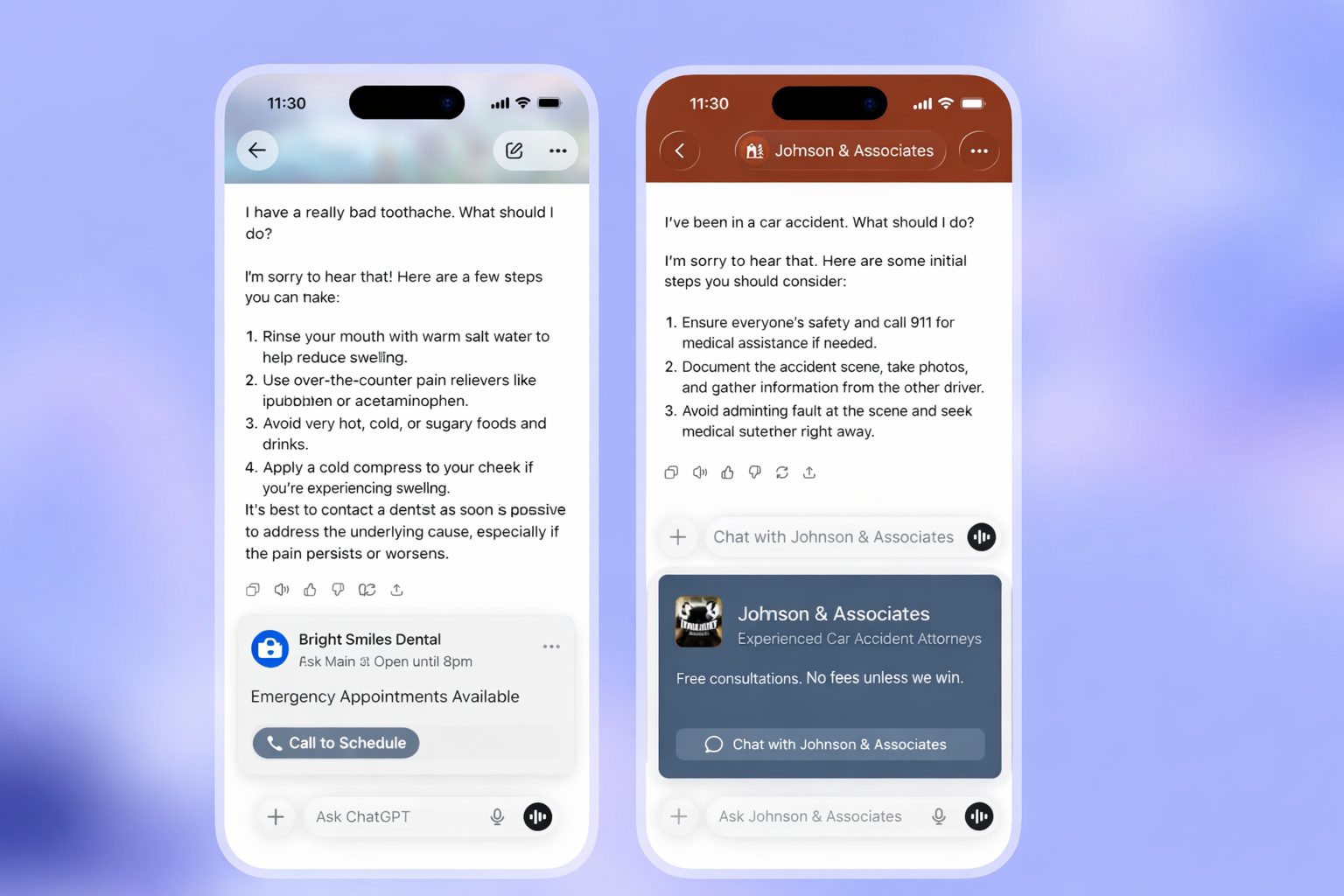
What OpenAI's ad policy says about healthcare advertisers
OpenAI sorts advertisers into three groups. Some categories are prohibited outright. Some are restricted: approved advertisers only, each account reviewed by hand. The rest are open.
Healthcare and medicine sits in the restricted group
Plastic surgery, dermatology, dental and any clinical provider advertising its own services is assumed not eligible until OpenAI approves the account. That is the state of the policy as we read it today, and it moves: the policy is young, it has changed more than once since launch, and in April 2026 OpenAI softened the block on medical and legal advice contexts. Before anyone quotes you a ChatGPT campaign for your practice, the current policy has to be checked that week.
Marketing agencies selling to practices sit in the open group. That is why Doctor Rank can run ads on ChatGPT and most of our clients cannot.
Why sensitive conversations in ChatGPT show no ads at all
Approved ads still skip sensitive conversations
Even a fully approved ad never displays in a conversation ChatGPT classifies as sensitive. Conversations about personal distress are among the categories OpenAI names, and conversations about a symptom, a diagnosis or a treatment decision tend to be treated the same way. OpenAI's own activation team confirmed the rule to us directly: in those conversations there are no ads. Not fewer ads. None.

Account review, ad review, then the sensitivity filter
Every advertiser passes an account review, then each individual ad passes its own review. Clear both and the sensitive-conversation filter still decides where the ad can appear.

What this means for a practice
That removes exactly the conversations that produce patients. The moment someone describes what is wrong and asks who to see is a sensitive conversation by definition. Paid placement cannot reach it. The only practices present in that answer are the ones ChatGPT names on its own.
What a medical practice can do instead: be the practice ChatGPT names
ChatGPT recommends a specific practice when it can verify who the provider is, what they treat, where, and why they are credible. Making a practice verifiable is the core of our AI search work for doctors, and it reaches the conversations where ads are suppressed.
Clear service and condition pages
One page per treatment, written from the doctor's own answers to the questions patients ask, so a model can extract who you treat, where, and for what.
Provider bios with credentials that check out
Board certification, training and affiliations that match what public records say about each provider. Credentials that agree across sources are what a model can safely repeat.
Reviews and listings that agree with the website
A steady, genuine review record and directory listings that carry the same facts give the model outside evidence that the practice is real and does this work.
How billing and review work if your practice is approved
- Account approval and ad approval are separate reviews. An approved account can still have each ad rejected.
- Billing is postpay on a dynamic CPM, with starting credit tiers at $25 and $50 and the balance charged at month end. There is no cost-per-click option.
- Campaign and ad names are read by the classifier too, so a campaign named after a regulated service can push an ad into review on its own.
- A rejected ad gets one request for manual review. Use it before editing the creative, and leave the ad alone while the review is pending.
Book a free consultation on ChatGPT for your practice
Doctor Rank holds its own ChatGPT ads account as an onboarded OpenAI advertiser, so we can tell you plainly what the platform will and will not allow for your specialty this month. If an approved campaign fits, we will say so and scope it. If being named in the answer is the better spend, we will show you exactly what that looks like. Prefer to read the platform yourself? Start with OpenAI's advertiser page.
 Common Questions
Questions medical practices ask about ChatGPT ads
Can my practice run ads on ChatGPT today?
For most medical practices, only after OpenAI approves the account. Healthcare and medicine is a restricted category, and during the current test period most clinical providers are excluded until approved. Ask us for the current state before planning a budget.
Do ads show when someone asks ChatGPT which doctor to see?
Conversations ChatGPT classifies as sensitive display no ads at all, and a question about a symptom, a diagnosis or who to see for it is that kind of conversation. The only practices in that answer are the ones ChatGPT cites on its own.
Why was my ad rejected as healthcare?
The classifier reads the surface of the creative and even the campaign name. Treatment words in the copy or the name can push an ad into the restricted category. OpenAI allows one request for manual review per rejection, so it is worth using before editing anything, and while that review is pending the ad should be left alone.
How does ChatGPT ads billing work?
Postpay on a dynamic CPM. Impressions accrue during the month against a credit limit, with starting tiers at $25 and $50, and the outstanding balance is charged at month end. There is no cost-per-click option yet. Account review and ad review are separate, so an approved account does not mean approved ads.
Is Doctor Rank an OpenAI advertiser?
Yes. We are an onboarded OpenAI advertiser with a direct relationship with an OpenAI client activation partner, and Doctor Rank holds its own ChatGPT ads account. Everything on this page comes from that account, our partner calls, and OpenAI's official onboarding materials.
Should my practice wait for the policy to change?
Nobody can promise it will. The ad policy is young and has already shifted more than once, and OpenAI publishes no timeline. Even if medical ads opened fully tomorrow, the sensitive-conversation rule would still keep ads out of the moments where patients decide. Being named organically works today and does not depend on a policy change.
Who will I be working with?
Artem Saribekyan, the founder. You deal with him directly from the first call, you have his cell phone number, and there is no account manager or ticket system between you and the work.
Is there a contract or lock-in?
No. Doctor Rank is month to month on one flat fee agreed upfront. There is no cancellation fee, and if you leave, the website and everything we built goes with you. We take one practice per specialty per city.
Related Services
Disclaimer: SEO results vary by market, competition, and implementation. The strategies discussed on this page reflect our direct experience managing campaigns for private medical practices. No specific ranking position or traffic outcome is guaranteed. For a personalized assessment, contact our team.