How to Rank in Google AI Overviews for Medical Practices
What actually works.
To rank in AI Overviews, structure content with clear answers, build E-E-A-T signals, and use FAQ sections. Healthcare sites need extra trust signals. Here's what works.
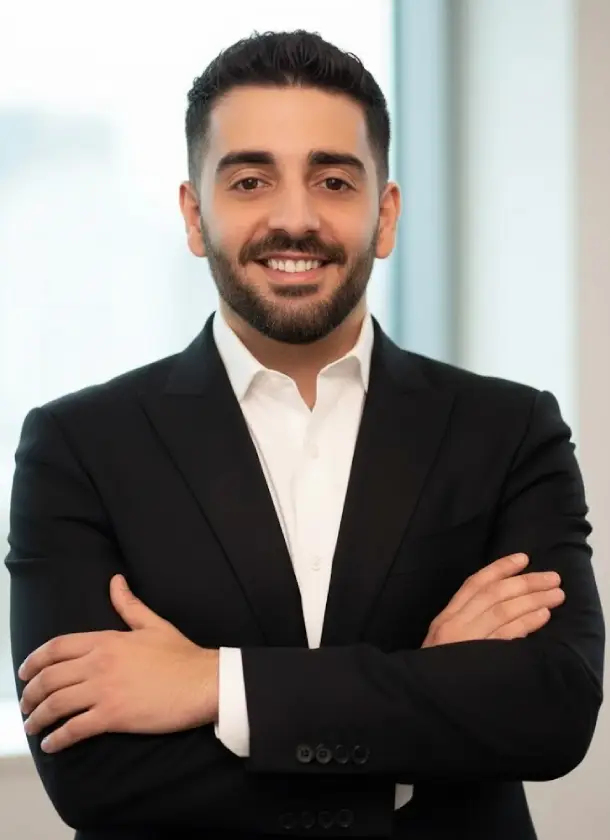
Artem Saribekyan
CEO, Doctor Rank

I started paying closer attention to Google AI Overviews about six months ago when a client asked why their competitor was getting mentioned at the top of Google for "best dermatologist in Brooklyn," even though they had better rankings in the traditional organic results.
We looked at the search results together. Right there, above everything else, was an AI-generated summary box. Google was essentially writing a recommendation on the spot, pulling from various sources and presenting it as the definitive answer.
"We're ranking #2 for our main keywords. But now there's this AI box above us that doesn't even mention our practice."
That conversation led me down a months-long process of testing, observing, and documenting what actually gets a healthcare practice featured in Google's AI Overviews. What I'm about to share comes from that research across our 20+ client accounts.
My name is Artem. I'm the CEO of Doctor Rank, and we manage SEO and AI search optimization for medical practices and law firms across the US. Here's what we've learned about Google AI Overviews and healthcare search.
The Short Answer
To rank in Google AI Overviews, focus on four things:
- 1
Structure your content with clear, direct answers at the beginning of each section. Google pulls snippets that directly answer questions.
- 2
Build comprehensive service pages that cover topics thoroughly. Thin content rarely gets cited in AI Overviews.
- 3
Show visible E-E-A-T signals on every page: credentials, author bios, citations to medical sources.
- 4
Use FAQ sections with exact patient language to match the question-and-answer format AI Overviews prefer.
Healthcare sites face higher scrutiny because Google treats medical queries as YMYL (Your Money Your Life) content. Keep reading for what actually works.
What Are Google AI Overviews (And Why Should You Care)?
Google AI Overviews (previously called Search Generative Experience or SGE) are AI-generated summaries that appear at the top of certain Google search results. Instead of just showing links, Google now writes a response based on information it pulls from multiple web sources.
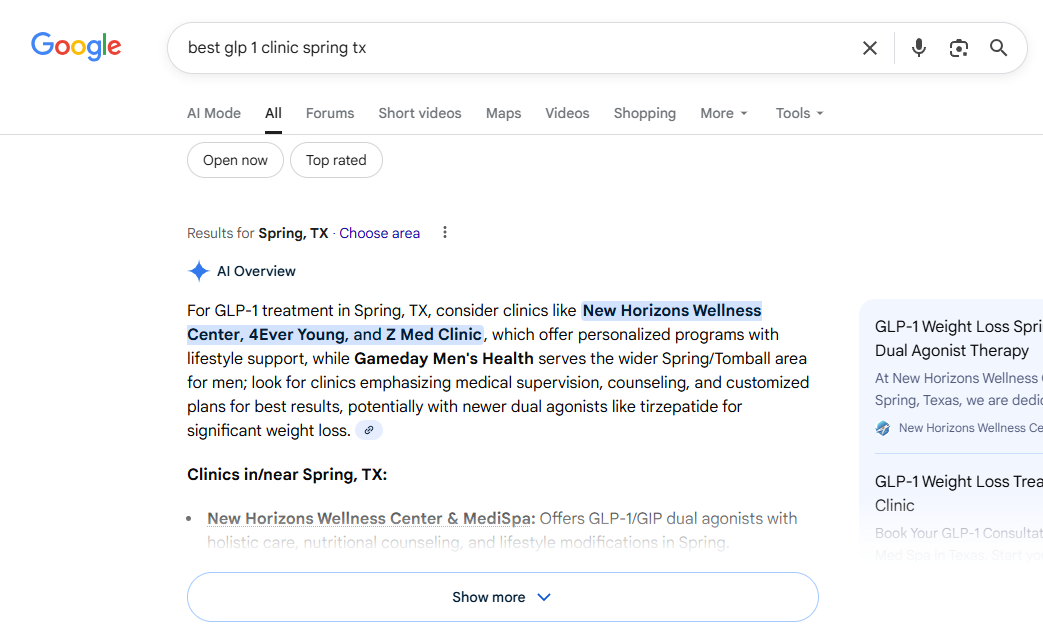
For healthcare practices, this matters enormously. When someone searches "what should I look for in a plastic surgeon" or "how long is recovery after rhinoplasty," they're increasingly getting an AI-written answer before they see any practice websites.
🔑 Key Insight
If your website is cited as a source in the AI Overview, you get mentioned at the top of Google in a way that can be more valuable than a traditional #1 ranking. If you're not cited, you become invisible to patients who never scroll past the AI box.
This is different from ranking on ChatGPT, though the principles overlap. AI Overviews are tied to Google's search index and prioritize websites that already rank well for relevant queries.
Why Healthcare Websites Face Higher Standards
Google has been clear about treating medical content differently. They call it YMYL content (Your Money Your Life) and it gets extra scrutiny.
For AI Overviews specifically, this means Google is more conservative about what healthcare sources it cites. A random blog post about rhinoplasty is less likely to be featured than content from an established plastic surgery practice with visible credentials.
What we've observed across our clients:
- Practices with clearly displayed physician credentials get cited more often
- Pages with medical sources and references perform better than those without
- Content that follows clinical accuracy standards shows up more consistently
- Sites with strong overall domain authority have higher citation rates
This isn't new for SEO. But for AI Overviews, these trust signals seem to carry even more weight. Google is essentially deciding whether to quote you as a trusted medical source, which is a higher bar than simply linking to your page.
What We've Found Actually Works for AI Overviews
From monitoring our clients across plastic surgery, dermatology, med spas, medical clinics, dental practices, and law firms including personal injury, family law, and criminal defense, here are the factors that consistently correlate with AI Overview citations:

Content Structure That AI Can Parse
AI Overviews pull specific snippets from web pages. The pages that get cited most often have clear, extractable answers near the top of each section.
What works:
- Starting sections with a direct answer before the detailed explanation
- Using descriptive H2 and H3 headings that match search queries
- Writing in a format that can be quoted out of context and still make sense
- Including bullet points and numbered lists for procedural information
Think about it from Google's perspective: they need to be able to extract a clean, accurate snippet. Rambling paragraphs without clear takeaways are harder to cite.
Comprehensive Service Pages (Not Thin Content)
We've noticed a clear correlation: pages with 1,500+ words that cover a procedure thoroughly get cited in AI Overviews significantly more than thin, 300-word service pages.
This doesn't mean longer is always better. It means comprehensive coverage of a topic signals to Google that you have actual expertise to share.
A thorough rhinoplasty page should cover: what it is, who it's for, the consultation process, what to expect during surgery, recovery timeline, risks and complications, results expectations, and FAQs. If you're missing major sections, you're less likely to be the source Google quotes.
Visible E-E-A-T Signals
E-E-A-T stands for Experience, Expertise, Authoritativeness, and Trustworthiness. For healthcare content, these signals need to be visible on the page.
What we've implemented across our clients:
- Author bios on every content page linking to physician credentials
- Board certifications and medical school training prominently displayed
- References to medical journals or guidelines where appropriate
- "Reviewed by Dr. [Name], MD" badges on educational content
- Clear contact information and practice location on every page
Blog Content With Integrated Answers
Most of the AI Overview citations we track come from blog posts. The ones that earn a citation directly answer questions patients are searching for.
Topics that perform well:
- "How long does [procedure] take to heal?"
- "What's the difference between [treatment A] and [treatment B]?"
- "Am I a good candidate for [procedure]?"
- "What are the risks of [treatment]?"
- "How much does [procedure] cost in [location]?"
What ChatGPT Visibility Taught Us About AI Overviews
We've been optimizing for ChatGPT visibility for several months now, and there's significant overlap with what works for AI Overviews:
- Strong Google Business Profile signals matter for both
- Review content with specific keywords influences AI recommendations
- Consistent citations across the web build authority for all AI systems
- E-E-A-T signals are evaluated by ChatGPT and Google AI alike
🔑 Key Insight
If you're already showing up on ChatGPT recommendations, you've likely built the foundation needed for AI Overviews. If you're not appearing on either, you have the opportunity to optimize for both simultaneously.
The main difference: AI Overviews are more directly tied to traditional SEO rankings. You generally need to be ranking on page one already for a keyword to be cited in the AI Overview for that query. ChatGPT casts a wider net.
Practical Steps to Start Ranking in AI Overviews
Here's what you can do right now to improve your chances of being cited:
Audit Your Service Pages
For each main procedure you offer, check: Is the page comprehensive? Does it start with a clear definition? Are there FAQs? Is the physician's name and credentials visible? If any of these are missing, that's your starting point.
Add FAQ Sections to Key Pages
Use the actual questions patients ask during consultations. Write clear, direct answers. This format maps directly to how AI Overviews extract information.
Structure Content for Answers
Every section should have a clear takeaway in the first sentence or two. Don't bury the answer in the third paragraph. Lead with the information, then expand.
Show Your Credentials
Add author bios to content pages. Link to your physician's full credentials. Include "Reviewed by" or "Written by" with qualifications. Make E-E-A-T visible on the page.
Check What's Actually Showing Up
Search for your main procedure keywords and see if AI Overviews appear. If they do, note which sources are being cited. If your competitors are there and you're not, you have a roadmap for what Google considers authoritative for that topic.
The Bigger Picture: AI Search Is Just Getting Started
Google AI Overviews are rolling out more broadly. ChatGPT is adding more local search capabilities. Perplexity is growing rapidly. Every major search interface is becoming AI-first.
The practices that invest in comprehensive, well-structured, authoritative content now are building assets that will pay dividends across multiple AI platforms. This isn't about gaming a single algorithm. It's about genuinely being the most helpful, trustworthy source of information in your specialty.
That's the silver lining: the same content improvements that help with AI Overviews also improve your traditional SEO, your patient education, and your overall online authority. There are no wasted efforts here.
Frequently Asked Questions
What's the difference between AI Overviews and featured snippets?
Featured snippets extract content from a single source. AI Overviews synthesize information from multiple sources and generate an original summary. You can be cited as a source in an AI Overview, but the text displayed is Google's rewritten version of your content.
Do AI Overviews appear for all healthcare searches?
No. Google is more cautious with YMYL queries. AI Overviews appear less frequently for direct medical advice queries ("should I take this medication") but more often for informational queries ("what is rhinoplasty recovery like"). The trigger varies by query type and perceived risk.
Can I optimize for AI Overviews without hurting my traditional rankings?
Yes. In fact, the optimizations help both. Comprehensive content, clear structure, strong E-E-A-T signals, and good user experience improve your chances for both traditional rankings and AI citations. They work together.
How long does it take to start appearing in AI Overviews?
If you already rank on page one for a keyword, improvements can show up within weeks. If you need to build rankings first, it takes longer, typically 3-6 months of consistent SEO work before you're in a position to be cited. AI Overviews tend to favor sites that already have organic visibility.
Does being cited in AI Overviews drive actual traffic?
Yes, but it's different from traditional organic clicks. Your site is cited as a source with a link, and users who want more detail click through. The click-through rate varies, but being positioned as the authoritative source at the top of Google has brand value beyond just the clicks.
Should I focus on AI Overviews or traditional SEO?
Both, but start with traditional SEO. You generally need organic visibility before you can appear in AI Overviews. Think of AI optimization as a layer on top of solid healthcare SEO fundamentals.
Need Help Getting Featured in AI Search Results?
AI search visibility is becoming essential for healthcare practices. The sooner you start optimizing, the more ground you gain on competitors who are still focused only on traditional SEO.
At Doctor Rank, we specialize in AI search optimization for healthcare and legal professionals. We only take one client per specialty per market to avoid conflicts. When you work with us, we're exclusively on your side.
If you want to know where you currently stand on Google AI Overviews, ChatGPT, and Perplexity, and what specific steps would help you get featured, reach out for a free AI visibility audit.
Get a Free AI Visibility Audit
We'll search for your practice across AI platforms, show you exactly what's showing up (and what's not), and give you a prioritized action plan. No fluff, no obligation.
Request Private ConsultationFrequently Asked Questions
How do I get my medical practice featured in Google AI Overviews?
Focus on four things: structure your content with clear direct answers at the top of each section, build comprehensive service pages with 1500+ words covering procedures thoroughly, display visible E-E-A-T signals like physician credentials and board certifications on every page, and create FAQ sections using exact patient language. Healthcare sites face higher scrutiny because Google treats medical queries as YMYL content.
Is ranking in AI Overviews the same as ranking on ChatGPT?
No. AI Overviews are tied to Google's search index and prioritize websites that already rank well for relevant queries. ChatGPT synthesizes information from training data and real-time browsing. The principles overlap but the ranking factors differ. A comprehensive AI search strategy should address both platforms plus Perplexity.
Do I need to redesign my website to rank in AI Overviews?
Not necessarily. AI Overviews care about content structure. A simple website with clear headings, direct answers, and proper schema markup will outperform a visually stunning site with poorly organized content. Focus on making your content easy for AI to parse and extract.
Get Your Practice into AI Overviews
Want help appearing in Google's AI Overviews for your specialty? We optimize healthcare practices and law firms for AI search visibility.
- SEO for doctors - medical practice optimization
- SEO for dentists - dental practice optimization
- SEO for personal injury lawyers - law firm optimization
- SEO for criminal defense lawyers - defense attorney optimization
Written by
Artem Saribekyan
Artem is the CEO and founder of Doctor Rank, a digital marketing agency specializing in local SEO and AI search optimization for healthcare providers and legal professionals. Based in New York, Doctor Rank manages SEO and marketing for over 20 medical practices including plastic surgeons, dermatologists, med spas, dental clinics, and personal injury attorneys.
Learn more about our team