AI Search is Changing How Patients Find Doctors
Written by Artem Saribekyan, Founder and CEO of Doctor Rank. Twenty years in search marketing for medical and legal practices. Building AI search and AI receptionist systems for practices since ChatGPT launched in late 2022. Last updated October 2026.
Why traditional SEO alone is not enough anymore.
Patients now ask ChatGPT and Google AI for doctor recommendations instead of searching. Learn how AI search optimization works and why your practice needs it now.
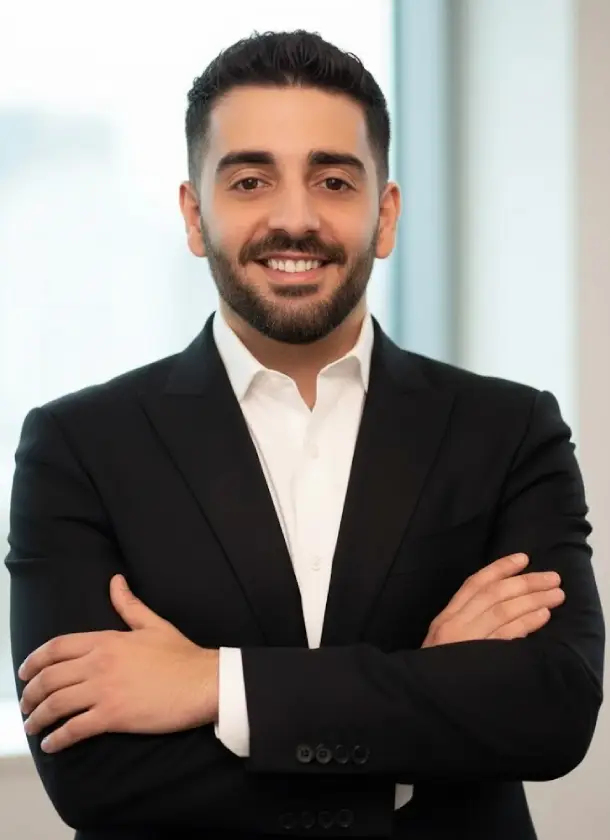
Artem Saribekyan
CEO, Doctor Rank

Short Answer
AI platforms like ChatGPT, Google AI Overviews, and Perplexity are now deciding which doctors get recommended to patients. If you're invisible on these platforms, you're invisible to a growing segment of patients who ask AI instead of searching Google. The practices optimizing for AI search now are capturing patients their competitors don't even know they're losing.
Last month, I typed "best plastic surgeon in Manhattan for rhinoplasty" into ChatGPT. A potential client of ours, one of the most skilled surgeons in the city, didn't appear anywhere in the response.
His competitor, a surgeon with fewer credentials but better digital visibility, was the first recommendation.
This is happening to medical practices across every specialty. And most don't even know it's happening. From multi-location clinics to solo practitioners, the shift affects everyone differently.
The Shift from Search to Ask
For 20 years, patients found doctors the same way: they typed keywords into Google and scrolled through results. Rankings mattered. Ads helped. Reviews built trust.
That model isn't dead, but it's no longer alone.
A growing number of patients now skip the search entirely. They open ChatGPT, Claude, or Perplexity and ask: "Who's the best cardiologist in Brooklyn?" or "Which dermatologist should I see for adult acne?"
They don't want ten blue links. They want an answer.
Key Insight
When you ask Google for a doctor, you get a list. When you ask AI for a doctor, you get a recommendation. The difference is massive: one shows options, the other makes a decision.
Why Traditional SEO Isn't Enough Anymore
Here's what most agencies miss: ranking on Google doesn't mean ranking on ChatGPT.
Each AI platform pulls data differently. Each has its own idea of who deserves to be recommended. And the practices winning on AI aren't necessarily the ones with the best Google rankings.
The surgeon I mentioned? He ranked position 2 on Google for his main keywords. But when patients asked ChatGPT, they never heard his name.
The Three AI Platforms That Matter for Healthcare
ChatGPT
ChatGPT synthesizes information from its training data and, when browsing is enabled, from real-time web searches. It looks at your overall web presence: your website content, third-party mentions, directory listings, and patient reviews across platforms.
To rank on ChatGPT, you need consistent NAP (name, address, phone) information across directories, structured content that clearly states your specialty and location, and a strong review presence. See our complete guide: How to Rank on ChatGPT.
Google AI Overviews
Google AI Overviews appear above traditional search results for many healthcare queries. They pull from Google's search index and local business data, including your Google Business Profile.
Getting featured requires a fully optimized GBP, content that directly answers patient questions, and strong local authority signals. Our AI Overviews guide covers the specific ranking factors.
Perplexity
Perplexity is the most citation-heavy AI search engine. Every answer includes numbered references to sources. For healthcare queries, it heavily cites Yelp (through a direct API partnership), Zocdoc, Healthgrades, and WebMD.
Your directory profiles are critical here. If your Yelp listing is incomplete or your Zocdoc reviews are thin, Perplexity won't cite you. Read our detailed breakdown: Perplexity AI for Healthcare.
The Competitive Advantage Window
Most medical practices aren't thinking about AI search yet. Most marketing agencies aren't offering it. This creates a window of opportunity.
This is especially true for aesthetic practices and med spas, where patients increasingly ask AI platforms for provider recommendations before booking.
The practices optimizing for AI search now are capturing patients that their competitors don't even know they're losing. When a patient asks ChatGPT for a recommendation and your competitor's name comes up instead of yours, you never get the chance to compete. There's no click to track, no ranking to monitor.
This is why we built our AI Search for Doctors and AI Search for Lawyers services. To help practices claim visibility before the window closes.
What Actually Matters for AI Search Visibility
After analyzing hundreds of AI responses across healthcare queries, we've identified the factors that consistently determine which practices get recommended:
A Real Example: The Manhattan Plastic Surgeon
Let me return to the plastic surgeon I mentioned. When we audited his AI visibility, we found:
The Diagnosis
- • His Yelp profile was incomplete with only 8 reviews
- • His website mentioned procedures but not specific outcomes
- • His Google Business Profile had outdated photos
- • He had zero mentions on health news sites
- • His directory listings had three different phone numbers
The Fix
- • Complete directory audit and NAP consistency update
- • Yelp profile optimization with complete services and photos
- • Website content restructured with procedure outcomes and patient stories
- • Review generation campaign targeting past patients
- • Press outreach to local health publications
Within 6 weeks, he started appearing in ChatGPT responses. Within 8 weeks, he was cited in Perplexity. The difference wasn't his skills, which were always excellent. It was his digital signal.
Do You Need a Separate AI SEO Service If You Already Pay for SEO?
Ask ten agencies this question and you will get ten different answers, because "AI SEO" is not a standard, defined service yet and everyone describes it differently. The label on your invoice does not matter. What matters is what your pages actually say. Open your top service pages and read them the way a patient would, then ask the exact question a patient would ask inside ChatGPT. If your practice does not show up as the answer, the name of the line item on your contract was never the real test.
Why Ranking First on Google Does Not Make ChatGPT Recommend Your Practice
Ranking number one on Google for your main keyword and getting recommended by ChatGPT for that same question are two different outcomes, decided by two different systems. I have watched a practice hold a strong Google position and never once get mentioned when I asked ChatGPT the identical question a patient would type in. Traditional keyword SEO got that practice onto the page. It did not earn the recommendation, because ranking and recommending stopped being the same job once patients started asking AI the question directly instead of scrolling a results page.
What AI Checks Before Recommending a Specialist
The criteria change by specialty, and that is the part most agencies skip entirely. Ask an AI assistant to recommend a dermatologist and it is weighing different things than if you ask it to recommend a psychiatrist: board certification, whether you are listed and reviewed on the specific platforms patients use for that specialty, how quickly a new patient can actually get seen, and whether you take walk-ins. These assistants field recommendation questions from people every day, across every specialty, so they have already built a working sense of what matters for yours specifically. Generic healthcare content written for "a medical practice" in general misses most of that.
What Page Content AI Prefers: Booking, Visit Details, Provider Approach
AI prefers pages that read like a provider is actually talking to a patient. A page built around a keyword density target does not get you there. That means explaining how booking works in practice, what a patient should expect before, during, and after a visit or procedure, and how you personally approach treating a condition based on your own years of seeing patients walk through that exact problem. That kind of specific, lived-in detail puts a nervous patient at ease before they ever call you, and it is also exactly the kind of content AI systems lean on when they decide which practice to put in front of someone.
Why a Specialty-Focused SEO Agency Matters More Now
Hiring an agency that understands your specific specialty matters more now than it used to, because the criteria AI checks are specialty-specific, and a generalist healthcare agency has no reason to know what they are for yours. A website with strong traditional keyword SEO can still lose the recommendation to a competitor with weaker rankings but more patient-focused, specialty-specific content, because the second practice is answering the questions AI is actually weighing. The agency you hire needs to understand both jobs, the ranking and the recommendation, and build for both at once.
If you want to see where your own pages stand against that criteria today, that is what our AI search optimization work is built to show you.
Why Doctors Cannot Wait on This
Google is scared of AI search. That's not speculation. It's why they rushed AI Overviews to market, why they're rebuilding search around conversational AI.
The traffic that used to flow through traditional search is fragmenting. Patients are discovering doctors through ChatGPT, finding specialists through Perplexity, and clicking on AI Overview recommendations instead of organic results.
The practices that adapt now will build authority that compounds over time. The practices that wait will find themselves playing catch-up against competitors who moved first.
The Bottom Line
AI search optimization isn't replacing traditional SEO. It's adding a new channel that's growing fast and has less competition. The question isn't whether to invest. It's whether you want to lead or follow.
Frequently Asked Questions
What is AI search optimization for doctors?
AI search optimization is the process of making your medical practice visible and recommendable on AI platforms like ChatGPT, Google AI Overviews, and Perplexity. When patients ask these platforms for doctor recommendations, AI search optimization ensures your practice appears in the answers.
How is AI search different from regular Google search?
Traditional Google search shows 10 blue links and you fight for rankings. AI search shows one or a few direct recommendations. Instead of choosing from a list, patients get a single answer. If you're not that answer, you don't exist in that conversation.
Do I need to optimize for all AI platforms?
Each platform has different data sources and ranking factors. ChatGPT synthesizes from training data and real-time browsing. Google AI Overviews pulls from search index and local signals. Perplexity cites specific directory sources like Yelp. A comprehensive strategy addresses all three.
Will AI search replace traditional SEO?
No, traditional SEO remains important. But AI search is capturing an increasing share of how patients discover doctors. The practices winning now are doing both: maintaining strong Google rankings while also optimizing for AI recommendations.
How quickly can I see results from AI search optimization?
Unlike traditional SEO which can take 6-12 months, some AI search improvements can show results within weeks. ChatGPT's real-time browsing means changes to your web presence can be reflected quickly. Directory updates can appear in Perplexity citations within days.
Do patients really use AI to find doctors?
Yes, and a growing share do, especially younger patients. That number climbs every month as AI tools become more mainstream. Early movers have a significant advantage in becoming the practice AI recommends.
Do reviews matter for AI search?
Absolutely. AI platforms heavily weight patient reviews when making recommendations. They analyze review sentiment, recency, and specificity. A practice with hundreds of detailed positive reviews will consistently outperform competitors with fewer or generic reviews.
Is my practice already visible on AI search platforms?
Most practices have some visibility but aren't being actively recommended. The gap between "existing in training data" and "being recommended as the top choice" is significant. A visibility audit can reveal exactly where your practice stands across all three major AI platforms.
Request Private Consultation
Find out if patients are finding your practice when they ask AI for recommendations. We'll audit your visibility across ChatGPT, Google AI Overviews, and Perplexity.
Request Request a CallbackWritten by
Artem Saribekyan
Artem is the CEO and founder of Doctor Rank, a healthcare SEO agency helping medical practices grow their patient base through AI search optimization.
Learn more about our team