Perplexity AI for Healthcare: How to Get Your Practice Cited
Why Perplexity is different from ChatGPT.
Original research from an agency with deep, hands-on experience managing healthcare SEO. How Perplexity AI selects providers, what signals matter, and how to get recommended. Based on real data from 50+ practices.
Artem Saribekyan
CEO, Doctor Rank
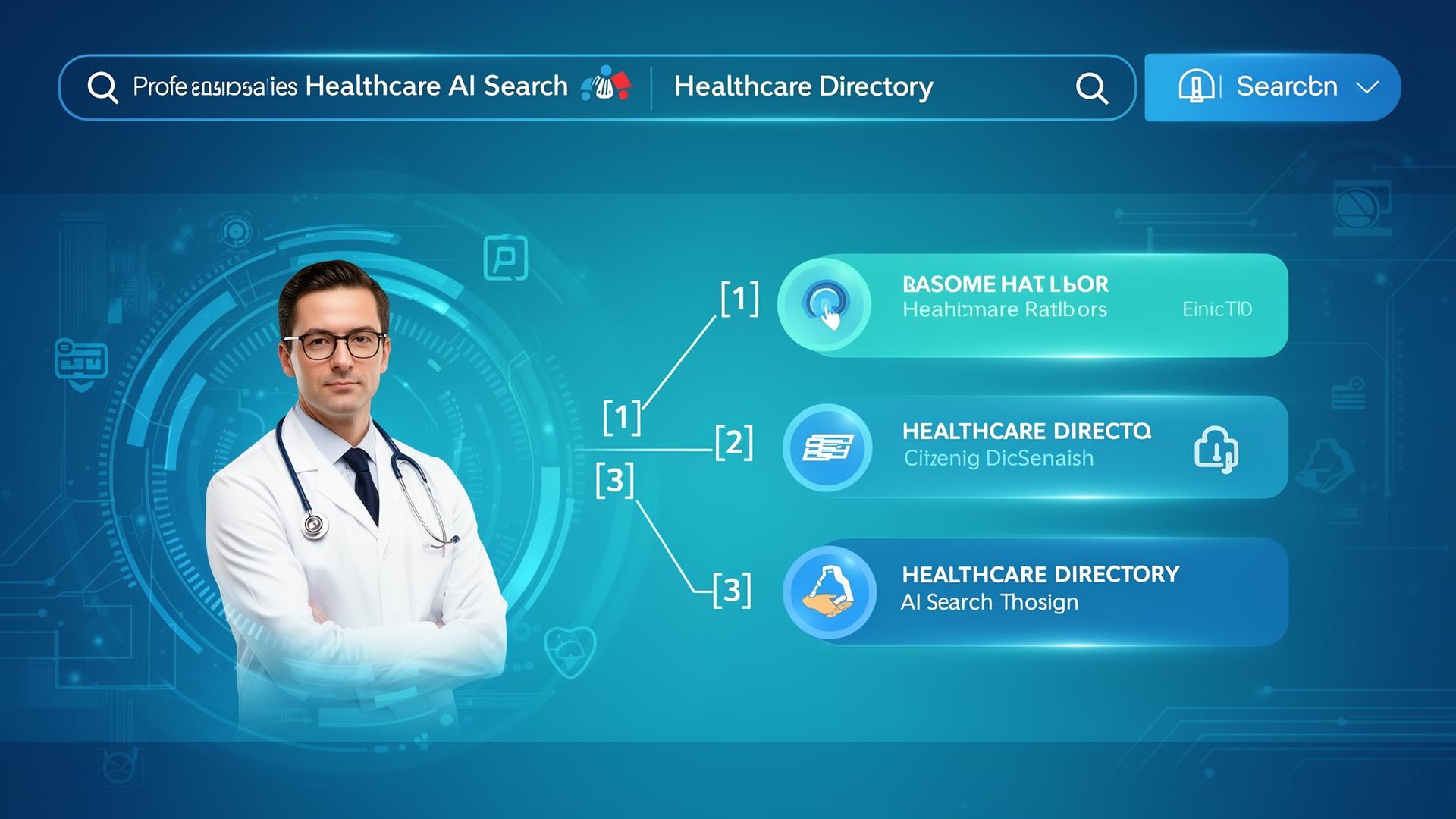
Perplexity AI is becoming a major source of healthcare recommendations. Patients are asking Perplexity questions like "best dermatologist in [city]" and "top-rated orthopedic surgeon near me," and Perplexity generates answers with specific provider recommendations. If your practice does not appear in those answers, you are losing patients to competitors who do. This guide explains exactly how Perplexity selects which healthcare providers to recommend and what you can do about it.
💡 Short Answer
To rank on Perplexity AI, your medical practice needs to be listed on the directories Perplexity actually pulls from. That means Yelp (which Perplexity has a direct data partnership with), Zocdoc, Healthgrades, and Vitals. Your website content must be structured so AI can extract and cite it. Answer questions directly. Use clear headers. Include statistics. Perplexity cites 15 sources per healthcare answer on average. If you are not on those sources, you are invisible.
Perplexity AI is not ChatGPT. Most practices treat all AI search the same way. That is a mistake. I have tested Perplexity extensively on our healthcare clients. The way it finds and recommends practices is fundamentally different from ChatGPT or Google AI Overviews. If you are only optimizing for one AI platform, you are missing patients who use the others.
Perplexity now handles 780 million searches per month. It accounts for 15 to 20 percent of all AI-driven website traffic in the US. And unlike ChatGPT, every single answer includes citations. Numbered links that users can click to verify the information. This changes everything about how you need to approach AI search optimization.
What Makes Perplexity Different from ChatGPT
ChatGPT generates answers from its training data. It knows what it learned before its knowledge cutoff. When you enable web browsing, it can search, but that is optional.
Perplexity works the opposite way. Every query triggers a live web search across 200 billion indexed URLs. It physically cannot answer without citing a source. The citations appear inline with numbered links like [1], [2], [3] that users can click.
| Feature | Perplexity | ChatGPT |
|---|---|---|
| Default behavior | Searches web for every query | Generates from training data |
| Citations | Always inline, numbered, clickable | Only when web browsing enabled |
| Information freshness | Real-time (updates every second) | Knowledge cutoff with optional browsing |
| Avg citations per health answer | 15 sources | 0-3 sources |
This citation-heavy approach means being visible on Perplexity is not about traditional SEO. It is about having content on platforms that Perplexity trusts enough to cite.
Where Perplexity Gets Healthcare Recommendations
When someone asks Perplexity "best dermatologist in Queens" or "dentist near me," it pulls from specific sources. This is not guesswork. Perplexity has documented partnerships and clear preferences.
Yelp is the Critical Source
Perplexity has a formal licensing agreement with Yelp through the Yelp Fusion API. This gives Perplexity direct access to business names, addresses, reviews, ratings, photos, and hours. Research found that Yelp appears in 33 percent of all local searches tested on Perplexity. It was cited across every industry category.
If your practice is not on Yelp with a complete, optimized profile, you are effectively invisible to Perplexity for local recommendations.
For healthcare searches specifically, the data shows Zocdoc is Perplexity's primary citation driver, followed by Healthgrades, Vitals, and hospital system websites. Industry-specific directories account for 24 percent of all Perplexity citations for local healthcare queries.
📊 Healthcare Directory Hierarchy for Perplexity
This is why we always tell our SEO for doctors clients that citation building reaches past Google now. The directories you choose matter because different AI platforms pull from different sources.
Why Most Practices Get This Wrong
I have had this conversation with dozens of practice owners. They say something like: "We have 300 citations. We are everywhere."
"Not all citations are equal. AI platforms like Perplexity and ChatGPT will not scan 300 directories to decide who to recommend. They only consider valuable platforms that Google also values."
Most of those 300 citations? Zero traffic. Zero value. AI never even looks at them.
What matters is being on the right 20 platforms, not 300 random ones. The ones that AI actually pulls from. The ones that have authority. The ones that patients actually use.
What Makes Perplexity Cite One Source Over Another
Research analyzing hundreds of millions of citations identified four primary factors:
Domain Trust and Authority (15% of ranking)
Perplexity maintains a curated pool of trusted sources. Established publications, medical institutions, and recognized directories receive preferential treatment.
Content Structure and Extractability (40% better visibility)
Content formatted for machine parsing sees up to 40 percent better visibility. Clear headers, FAQ sections, self-contained paragraphs that can be quoted independently, and answer-first structure.
Freshness and Recency
Half of Perplexity's citations come from content published in the last year. 90 percent come from the last three years. A service page you wrote three years ago and never touched? Perplexity has probably stopped citing it.
Semantic Relevance Over Keywords
Perplexity uses hybrid search combining vector (semantic) and lexical (keyword) retrieval. Conceptual relevance matters more than keyword density. Stuffing keywords will not help.
What Traditional SEO Factors Matter Less for Perplexity
- •Raw backlink counts: 85 percent of URLs that Perplexity cites have fewer than 50 backlinks
- •Keyword density: Semantic understanding trumps exact match keywords
- •Click-through rate signals: Perplexity does not use CTR the way Google does
- •Meta tag optimization: Less important than content structure
Key Insight: Reddit's Influence
Reddit is Perplexity's single most-cited source at 6.6 percent of all citations. Real user experiences and community validation influence Perplexity's recommendations significantly. This connects directly to reputation management. Patient reviews on Yelp, Healthgrades, and Google now feed machines as well as human readers. AI reads them and incorporates review sentiment into recommendations.
Healthcare Queries Get No Special YMYL Protection
Google treats healthcare content carefully under its YMYL (Your Money Your Life) guidelines. Extra scrutiny. Higher standards for expertise. Perplexity does not.
Research found fewer than 1 percent of AI outputs now include medical warnings, down from over 26 percent in 2022. Perplexity cites consumer health media (Healthline, WebMD) alongside peer-reviewed research without clear distinction.
What does this mean for practices? The bar for appearing in healthcare answers is lower on Perplexity than on Google. But it also means you need content that demonstrates genuine expertise because you are competing with every source Perplexity can cite.
The most frequently cited health sources on Perplexity are PubMed Central, Cleveland Clinic, and Mayo Clinic. If you want to be in that conversation, your content needs to match that level of authority and comprehensiveness.
How to Optimize for Perplexity AI: The Practical Steps
Based on our testing and the available research, here is the optimization hierarchy:
1Priority 1: Directory Presence (Highest Impact)
If you do nothing else, do this:
- Claim and optimize your Yelp profile with complete information, photos, and active review management
- For medical practices: prioritize Zocdoc, Healthgrades, and Vitals with consistent credentials
- Ensure your Google Business Profile is complete and regularly updated
- Consistency is key: Name, address, and phone number must be identical across all platforms
2Priority 2: Content Structure for AI Extraction
Format your content so AI can quote it:
- Use question-format headers that mirror how users query AI
- Lead every section with a direct answer in the first 40 to 60 words
- Include statistics every 150 to 200 words linked to authoritative sources
- Add FAQ sections with FAQPage schema markup
- Make each section self-contained so AI can cite it independently
3Priority 3: Authority and Freshness Signals
- Update key content pages at minimum quarterly, more often for competitive queries
- Include expert quotes with credentials (15 to 30 percent visibility lift in research)
- Cite authoritative sources like .gov, .edu, and peer-reviewed research
- Display publication and last updated dates prominently
4Priority 4: Technical Requirements
- Allow PerplexityBot in your robots.txt file
- Ensure content is in accessible HTML (Perplexity cannot fully render JavaScript-heavy pages)
- Maintain page load speed under 3 seconds
- Implement Article, FAQ, and LocalBusiness schema markup
If you want help with Perplexity optimization for your healthcare practice, Doctor Rank specializes in AI search optimization for doctors, dentists, and medical clinics. We track which providers Perplexity recommends in your specialty and market, and we adjust your online presence to earn those recommendations. See our SEO services for doctors, medical clinic SEO, med spa SEO, or dental SEO services.
Perplexity vs ChatGPT vs Google AI Overviews: Why You Need All Three
I have tested the same queries across all three platforms. The results are different every time. When I searched "best orthodontist queens" on ChatGPT, it cited Yelp's Top 10 list. Google AI Mode pulled from 10 different sites. Perplexity cited Zocdoc and Healthgrades. None of them gave the same answer.
This is why optimizing for just one AI platform is a mistake. Patients use different tools. Some use ChatGPT. Some use Perplexity because they want citations. Some use Google AI Overviews without even realizing it because it appears at the top of search results.
Our AI search optimization approach addresses all three. Because 60 percent of citation sources overlap between platforms. Strong traditional SEO combined with the right directory presence covers most of your bases. But the remaining 40 percent requires platform-specific optimization.
30M
Daily queries on Perplexity
10,000x
Growth in 3 years
Perplexity processed 3,000 daily queries in 2022. Today it handles 30 million daily. The window for early optimization is narrowing.
Frequently Asked Questions
What is Perplexity AI and how is it different from ChatGPT?
Perplexity AI is an answer engine that searches the web in real-time for every query and always includes citations. ChatGPT generates responses from pre-trained knowledge and only searches the web optionally. For healthcare practices, this means Perplexity visibility depends on being listed on the sources it cites.
What directories does Perplexity use for healthcare recommendations?
Perplexity has a direct data partnership with Yelp, making it the most critical platform. For healthcare specifically, it heavily cites Zocdoc, Healthgrades, and Vitals. Your Google Business Profile also gets indexed indirectly. Being absent from these platforms means being invisible to Perplexity for local healthcare searches.
How do I get my medical practice cited on Perplexity?
Start with directory presence: optimize your Yelp, Zocdoc, and Healthgrades profiles with complete, consistent information. Then structure your website content for AI extraction using clear headers, answer-first paragraphs, and FAQ sections. Update content regularly since Perplexity heavily favors recent sources.
Does Perplexity optimization replace traditional SEO?
No. About 60 percent of sources Perplexity cites also rank in Google's top 10. Strong traditional SEO remains foundational. But Perplexity weights directory listings, content freshness, and community validation (like Reddit discussions) more heavily than Google does. You need both approaches.
How important is content freshness for Perplexity?
Extremely important. Research shows 50 percent of Perplexity citations come from content published in the last year. For competitive queries, content visibility decays without regular updates. We recommend updating key service pages at minimum quarterly.
Do backlinks matter for Perplexity ranking?
Less than you might think. 85 percent of URLs that Perplexity cites have fewer than 50 backlinks. Domain trust and content structure matter more than raw backlink counts. That said, backlinks from authoritative healthcare sources still help establish the credibility that Perplexity looks for.
How many people use Perplexity AI?
Perplexity has 22 to 45 million monthly active users and processes 780 million queries per month. It accounts for 15 to 20 percent of all AI-driven website traffic in the US. Growth has been exponential, from 3,000 daily queries in 2022 to 30 million daily today.
Should I optimize for Perplexity, ChatGPT, or Google AI Overviews?
All three. Testing shows each platform cites different sources for the same query. Patients use different tools, and you need visibility across all of them. The good news is that strong directory presence and proper content structure help on all platforms. About 60 percent of the work overlaps.
Does Perplexity treat medical content differently?
Unlike Google, Perplexity does not apply special YMYL safeguards to healthcare content. It cites consumer health media alongside peer-reviewed research without distinction. This means the bar for appearing in healthcare answers is lower, but you also compete with everyone. Quality content that demonstrates genuine expertise stands out.
How long does it take to see results from Perplexity optimization?
Directory updates can impact visibility within days to weeks since Perplexity searches in real-time. Website content changes take longer as PerplexityBot needs to recrawl and reindex. For comprehensive AI search optimization, expect 2 to 4 months to see meaningful visibility improvements.
Related Articles
How Perplexity AI Selects Healthcare Providers to Recommend
Perplexity pulls from multiple sources when answering healthcare queries: Google search results, medical directories (Healthgrades, WebMD, Vitals), practice websites, and patient review platforms. The providers who appear most frequently across these sources get recommended.
Key factors that increase your chances of appearing in Perplexity healthcare results:
Consistent NAP across directories. If your practice name, address, and phone number vary between your website, Google Business Profile, and Healthgrades, AI platforms struggle to connect these as the same practice.
Structured content on your website. Perplexity favors pages with clear headings, FAQ sections, and condition-specific content. Generic "About Us" pages do not get cited. Pages that answer specific patient questions do.
Review volume and recency. Perplexity references reviews from Google and medical directories. Practices with 50+ recent reviews are more likely to be recommended than those with 10 outdated reviews.
Schema markup. MedicalBusiness, Physician, and FAQPage schema help AI platforms parse your website content accurately. This is a technical SEO step most practices skip.
Perplexity AI vs ChatGPT for Healthcare Searches
Perplexity and ChatGPT handle healthcare queries differently. ChatGPT generates answers from its training data and does not cite specific sources in real-time. Perplexity searches the web live and cites its sources, making it closer to a search engine than a chatbot.
For healthcare providers, this distinction matters. Perplexity optimization overlaps heavily with traditional SEO because it pulls from the same web sources Google uses. ChatGPT optimization requires building your practice's presence in the training data through mentions on authoritative sites, published research, and structured content.
A complete AI search strategy addresses both platforms. At Doctor Rank, we monitor how both Perplexity and ChatGPT recommend healthcare providers and adjust strategies accordingly.
Healthcare providers looking to appear in Perplexity results need a comprehensive SEO strategy. See our medical practice SEO and medical clinic SEO services. For med spas and aesthetic practices, our med spa SEO services include Perplexity optimization.
Get Found on Every AI Platform
Perplexity, ChatGPT, Google AI Overviews. Patients use all of them. If you are only visible on one, you are missing the others. We help healthcare practices and law firms optimize for the entire AI search landscape.
Request Private ConsultationWritten by
Artem Saribekyan
Artem is the CEO and founder of Doctor Rank, a digital marketing agency specializing in local SEO and AI search optimization for healthcare providers and legal professionals. Based in New York, Doctor Rank manages SEO for over 20 accounts including personal injury attorneys, family lawyers, criminal defense attorneys, plastic surgeons, dermatologists, and dental practices.
Learn more about our team