What Is Topical Authority and Why Does It Matter for Medical Practices? How Google Evaluates Your Expertise in 2026
Topical authority means Google evaluates your medical website's expertise topic by topic across your site. Here is how it works, why it changed in 2026, and how to build it for your practice.

Artem S.
CEO, Doctor Rank
The Short Answer
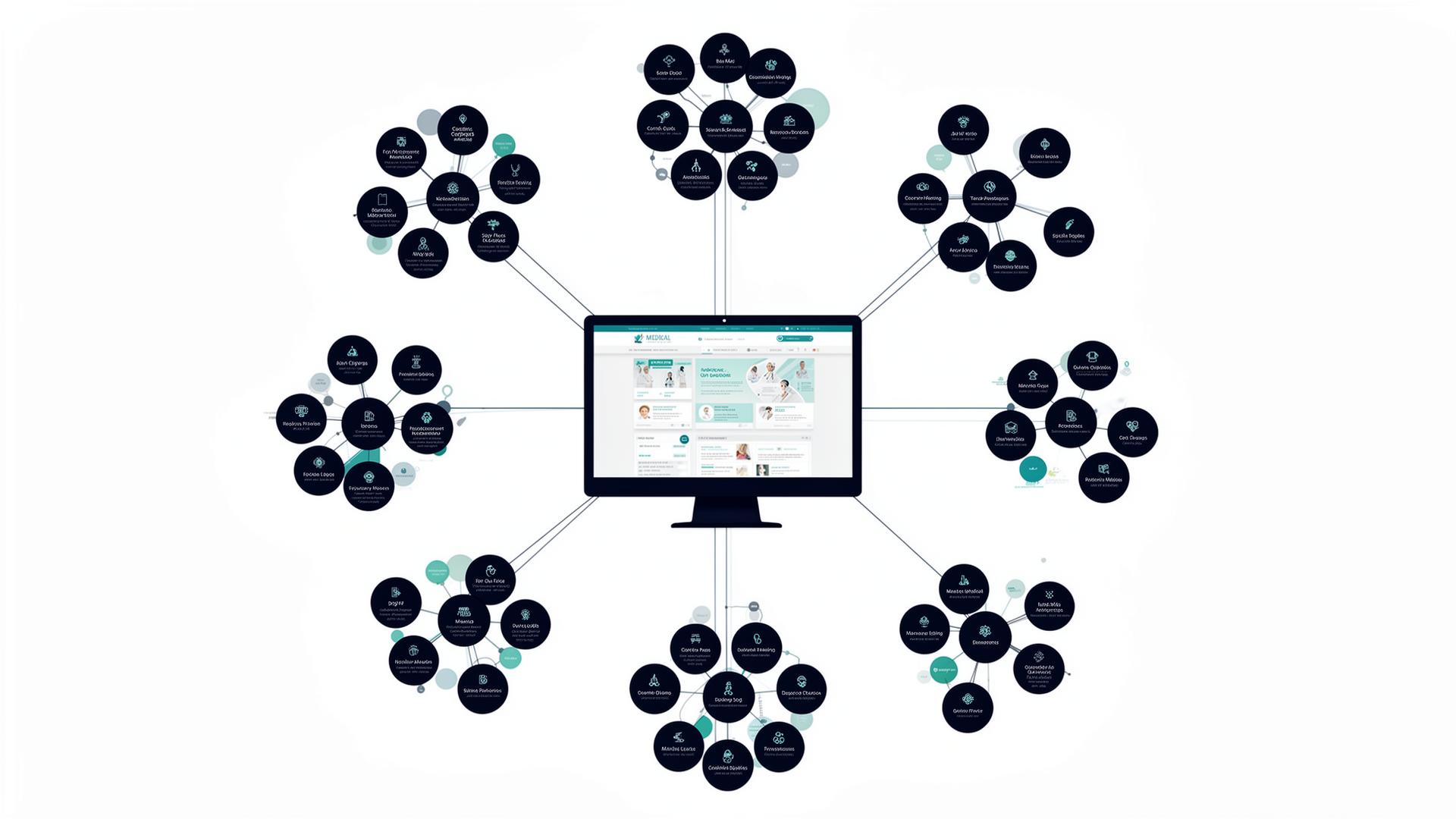
Topical authority is Google's way of measuring how deeply your website covers a specific subject. For medical practices, it means Google evaluates whether your website demonstrates genuine expertise on each topic you publish content about, and it does this topic by topic across your entire site. A dermatology practice that publishes thorough, well-credentialed content about acne, eczema, psoriasis, and skin cancer builds topical authority in dermatology. That same practice publishing a blog about orthopedic knee injuries does not help and may actually dilute its authority. The 2026 core update made this evaluation more granular, which means medical practices need to be more intentional about what content they publish and how it connects to their core expertise.
Topical Authority Explained for Non-Marketers
If you are a doctor or practice manager reading this, the concept of topical authority is straightforward once you strip away the marketing jargon. Think of it this way: if a patient is researching a medical condition and finds two websites with articles about that condition, Google needs to decide which one to rank higher. One website is a dermatology practice that has 30 articles covering every aspect of skin conditions, from causes and symptoms to treatments and recovery. The other is a general wellness blog that published one article about skin conditions alongside content about yoga, nutrition, and meditation. Google will favor the dermatology practice because it has demonstrated deep, focused expertise on that topic. That is topical authority. It is the depth and consistency of your coverage on a specific subject that signals to Google you are a genuine expert worth ranking.
Google's own documentation from the February 2026 Discover update puts it clearly: the system identifies expertise on a "topic-by-topic basis." A local news site with a dedicated gardening section can have established authority in gardening, even though it covers other topics. But a movie review site that wrote one article about gardening would not have gardening authority. The same principle applies directly to medical websites.
🔑 Key Insight
"Google is evaluating expertise topic by topic now. There is a difference. If we want to build authority for a plastic surgery practice and the doctor answering questions about liposuction is not board-certified in plastic surgery, Google will not accept that. We have to match the right provider to the right topic." — Artem Saribekyan, CEO & Founder, Doctor Rank
How Topical Authority Changed in the 2026 Update
Before this update, topical authority was already a factor, but Google's evaluation was more forgiving. A strong medical website with good overall authority could rank reasonably well for topics somewhat outside its core specialty. A plastic surgery practice could publish a blog about general wellness tips and still benefit from the site's overall domain strength.
The 2026 update tightened this significantly. Google now evaluates topical authority more granularly, meaning your ability to rank for a topic depends much more heavily on whether your website has demonstrated deep, consistent expertise specifically on that topic. The overall strength of your domain still matters, but it no longer carries content on topics where you have not built dedicated authority.
For medical practices, this has practical implications:
Your content should stay focused on your actual specialty. A dermatologist publishing content about dental procedures is not building authority. It is potentially diluting it.
Depth matters more than breadth. Five thorough articles about rhinoplasty recovery (covering each stage, complications, expectations, revision considerations, and patient selection) build more topical authority than 20 surface-level articles about 20 different procedures.
Every piece of content should connect to your core expertise. Blog posts, service pages, and FAQ content should all reinforce the same areas of specialty. This creates a web of interconnected authority signals.
How to Build Topical Authority for Your Medical Practice
Define Your Core Topics
Start by listing the procedures and services that generate the most revenue for your practice and the conditions you treat most frequently. These are your core topics. For a plastic surgery practice, your core topics might be: rhinoplasty, breast augmentation, liposuction, tummy tuck, facelift, and non-surgical injectables. For a dental practice: dental implants, Invisalign, cosmetic dentistry, general dentistry, and emergency dental care.
Create Pillar Content for Each Core Topic
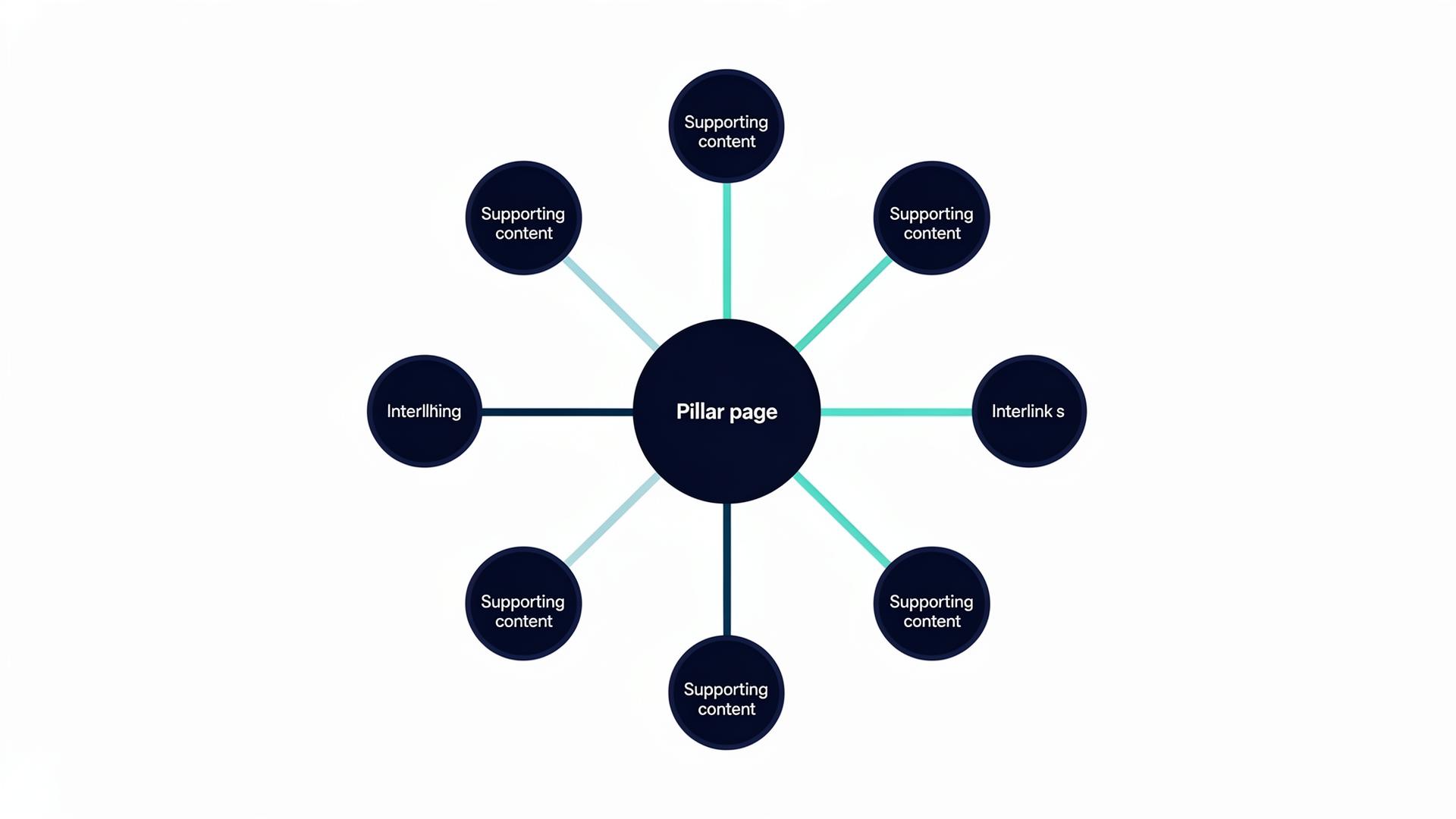
A pillar content piece is a comprehensive, in-depth page that covers everything a patient would want to know about a specific topic. For dental implants, your pillar page would cover: what dental implants are, who is a candidate, the procedure timeline, cost ranges, recovery expectations, alternatives, and frequently asked questions. This page becomes the central hub that all related content links back to. We build these pillar pages as part of our SEO services for dentists, plastic surgeons, dermatologists, and all of our medical clients.
Build Supporting Content Around Each Pillar
For every pillar topic, create blog posts that address specific subtopics, questions, and related concerns. If dental implants is your pillar topic, supporting blog posts might include: "How Long Do Dental Implants Last?", "Dental Implants vs. Dentures: Which Is Right for You?", "Can You Get Dental Implants If You Have Bone Loss?", and "What to Eat After Dental Implant Surgery." Each of these posts targets a specific question patients search for, and each one links back to your pillar page. This creates a cluster of content around dental implants that signals to Google: this website covers this topic thoroughly.
Interlink Everything
Internal linking, which means linking between pages on your own website, is how you tell Google which topics are connected and how your content is structured. Every supporting blog post should link back to its pillar page. Pillar pages should link to their supporting blogs. Related topics should cross-link where it makes sense. This creates what we call a topic cluster, and it is one of the most effective ways to build topical authority.
Keep Each Provider in Their Lane
Topical authority is strengthened when the content is associated with a provider who has verifiable expertise in that specific area. If your practice has a board-certified dermatologist and a board-certified plastic surgeon, make sure each provider is associated with the content that falls within their certification. We covered this in detail in our article on how provider credentials affect your procedure pages.
Common Topical Authority Mistakes Medical Practices Make
Publishing content outside your specialty to fill the blog calendar. If you are a dermatology practice, writing about knee replacement surgery does not help you rank for anything. It actually sends a confusing signal to Google about what your website's expertise is.
Creating thin, surface-level content on too many topics. Ten 300-word blog posts about ten different procedures build less authority than three 1,500-word articles that go deep on three procedures. Google rewards depth.
Not interlinking content. If your blog posts do not link to your service pages and vice versa, Google cannot see the relationship between your content. You lose the clustering effect that builds topical authority.
Ignoring content updates. Topical authority is not built once and forgotten. Google evaluates freshness, and content that is more than six months old may need updating to maintain its authority signal.
How Topical Authority Connects to AI Search
AI search platforms like Google AI Overviews, ChatGPT, Perplexity, and other AI agents rely on topical authority when deciding which sources to cite. When these platforms need to recommend a dermatologist in a specific area, they look for websites that demonstrate deep, focused expertise on dermatology. A practice with strong topical authority is more likely to be cited by AI search tools. We help our clients build this authority across both traditional and AI search channels.
How Doctor Rank Builds Topical Authority for Medical Practices
We build topical authority through a systematic process of pillar content creation, supporting blog development, interlinking, and provider-content mapping. We do this for dentists, med spas, wellness clinics, medical clinics, and law firms. Contact us to learn how we would build a topical authority strategy for your specific practice.
Frequently Asked Questions
How long does it take to build topical authority?
Building meaningful topical authority typically takes 3 to 6 months of consistent content creation and optimization. It is not something that happens with a single blog post. It requires a sustained strategy of pillar pages, supporting content, proper interlinking, and regular updates. The timeline depends on your specialty, competition level, and how much quality content you can produce.
Can a small practice build topical authority against larger competitors?
Yes. In fact, smaller practices with a focused specialty often have an advantage. A solo dermatologist who publishes deep, expert content exclusively about dermatology topics can build stronger topical authority in that area than a large hospital system that publishes broadly across dozens of specialties. Depth and focus beat size.
Does topical authority affect Google Business Profile rankings?
Indirectly, yes. While Google Business Profile rankings are influenced by proximity, relevance, and prominence, your website's topical authority contributes to the prominence signal. A website with strong, focused content on the services listed in your Google Business Profile reinforces your relevance for those searches.
References and Sources
- February 2026 Discover Core Update - Topic-by-Topic Expertise - Google Search Central Blog
- Creating Helpful, Reliable, People-First Content - Google Search Central Documentation
- Google Search Quality Rater Guidelines - Google (PDF)
- Google Search's Core Updates - Google Search Central Documentation
Published by Doctor Rank. Strategies discussed in this article are based on our direct experience managing SEO for 40+ healthcare and legal practices. Google's algorithms evolve continuously, and what works today may shift with future updates. For a personalized assessment of how these changes affect your practice, contact our team.
Written by
Artem S.
Artem is the CEO and founder of Doctor Rank, a digital marketing agency specializing in local SEO and AI search optimization for healthcare providers and legal professionals. Based in New York, Doctor Rank manages SEO for over 20 accounts including personal injury attorneys, family lawyers, criminal defense attorneys, plastic surgeons, dermatologists, and dental practices.
Learn more about our team