Does It Matter Which Doctor Is Listed on Your Procedure Pages? How Google Evaluates Medical Expertise by Topic
Google now evaluates medical expertise by specific topic across your site. The wrong doctor on the wrong procedure page weakens your E-E-A-T and costs you rankings. Here is how to fix it.

Artem S.
CEO, Doctor Rank

The Short Answer
Yes, it matters significantly. Google now evaluates medical expertise topic by topic across your website. If the doctor listed on your liposuction page is not board-certified in plastic surgery, Google recognizes that mismatch and it weakens the ranking signals for that page. This is especially important for multi-provider practices where one doctor may have been listed as the authority across all procedures, even those outside their board certification. The fix is straightforward: match each provider to the service pages and blog content that align with their actual credentials and specialty.
What Changed in How Google Evaluates Medical Expertise?
Until recently, Google evaluated a medical website's authority more broadly. If your site had strong overall credentials, good reviews, and quality content, that authority tended to help all of your pages. A well-established plastic surgery practice could rank for both facial and body procedures based on the overall strength of the website.
That approach has shifted. Google's systems now assess whether the specific content creator or reviewer associated with a page has relevant expertise for that specific topic. In medical terms, this means Google is checking whether the doctor who is presented as the authority on a procedure page is actually board-certified in the specialty that covers that procedure.
This change aligns with how Google has been updating its Search Quality Rater Guidelines. The guidelines instruct human raters to evaluate expertise at the content level, page by page. For YMYL topics like medical procedures, the standard is particularly high: the content should come from or be reviewed by someone with direct, verifiable expertise in that specific area.
Why This Matters for Multi-Provider Practices
Many medical practices have multiple providers with different specialties working under one roof. This is common in plastic surgery, dermatology, dental, and multi-specialty clinics. The problem arises when the website treats one provider as the universal authority across all service pages.
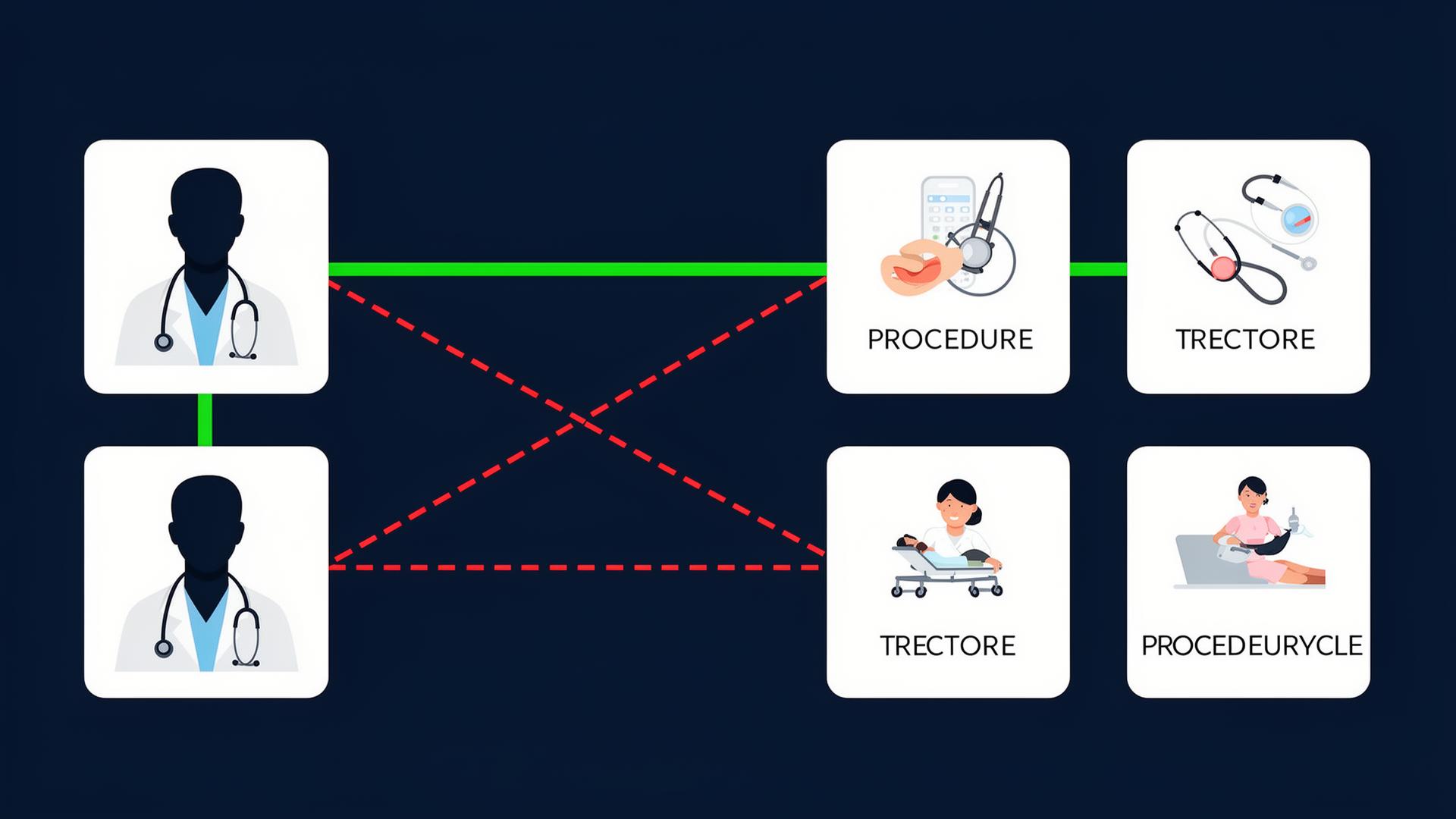
Here is a real scenario we encountered during a client audit. A plastic surgery practice had two primary doctors. One was a board-certified head and neck surgeon who specialized in facial procedures such as rhinoplasty, facelifts, and neck lifts. The other was a board-certified plastic surgeon whose expertise covered body procedures like liposuction, tummy tucks, breast augmentation, and body contouring.
The website had the head and neck surgeon listed as the expert on every procedure page, including all body procedures. His name appeared in the "according to Dr. [Name]" sections, his answers were used for pricing and recovery questions, and his credentials were cited throughout. The problem is that his board certification does not cover body procedures. He is fully qualified for facial work, but when Google's systems evaluate the liposuction page and see a head and neck surgeon as the cited authority, the E-E-A-T signal for that page is compromised.
🔑 Key Insight
"What we should have done from the beginning is separate who answers what based on their actual certification. A head and neck surgeon answering questions about liposuction and BBL is not the right authority signal. Their authority will only be built based on their actual expertise. That is the rule now." — Artem Saribekyan, CEO & Founder, Doctor Rank
How to Identify If Your Website Has This Problem
Go through each service page on your website and answer these questions: Which doctor is named or quoted on this page? Is that doctor board-certified in the specialty that covers this specific procedure? If the answer is no, you have a mismatch that could be affecting your rankings.
Check your blog posts as well. If your blogs include a "medically reviewed by" or "written by" attribution, make sure the attributed doctor is qualified to review content on that specific topic. A blog about breast augmentation recovery should be reviewed by a board-certified plastic surgeon, not a dermatologist or general surgeon, even if they are part of the same practice.
This audit should be part of your broader content review process. If you have not done a comprehensive audit recently, especially after the 2026 core update, now is the time. We discuss the full scope of what to look for in our article on how Google algorithm updates affect medical websites.
How to Fix the Mismatch
Map Each Provider to Their Qualified Procedures
Create a simple document that lists every provider at your practice alongside their board certifications and the specific procedures or services they are qualified to perform. This becomes your reference for assigning provider authority across all website content.
Update Service Page Attributions
On each procedure page, replace the cited provider with the one who holds the relevant board certification. If Dr. A answered questions about liposuction pricing but Dr. B is the board-certified plastic surgeon, the attribution should change to Dr. B. You do not need to re-interview the qualified provider if the clinical information is the same. The answers about recovery timelines, costs, and techniques for a procedure do not change based on who is listed. What changes is the authority signal.
Update Blog Attributions
Go through your blog archive and update the "medically reviewed by" blocks. Any blog about a body procedure should be attributed to the provider who is board-certified in that area. Any blog about facial procedures should cite the facial specialist. This does not require rewriting the content, just updating the attribution and ensuring the author credentials block reflects the correct provider.
Keep the Practice Owner Visible
If the practice owner is not the board-certified specialist for every procedure, they should still appear on the website. They are the face of the practice and patients expect to see them. The key is to lead with the qualified provider for E-E-A-T purposes while keeping the owner present in a supporting role. On a liposuction page, for example, the clinical authority section references the board-certified plastic surgeon, while the practice owner can appear in sections about the practice's philosophy or approach to patient care.
How This Connects to Schema Markup
Schema markup should reinforce the provider-to-topic mapping. Each service page should include person schema for the provider who is the cited authority on that page. If Dr. B is the board-certified plastic surgeon associated with your liposuction page, the person schema on that page should carry Dr. B's credentials.
Similarly, your blog posts need person schema for the reviewing provider, article schema, FAQ schema where applicable, and medical web page schema. We cover the full schema requirements in our guide on how Google algorithm updates affect medical websites.
What About Practices with a Single Provider?
If your practice has one doctor who is board-certified in a single specialty, your situation is simpler but still requires attention. Make sure that provider's bio is comprehensive and detailed, that their credentials are clearly displayed on every service page and blog post, and that the scope of content on your website aligns with their actual expertise.
For example, if you are a board-certified dermatologist, publishing content about cosmetic surgery procedures that fall outside dermatology could actually hurt your website's topical authority rather than help it. Stay within your lane, go deep on the topics where you have genuine expertise, and build authority through the quality and specificity of your content. This ties directly into the concept of topical authority, which we address in our SEO services for doctors.
The AI Search Connection
AI search platforms evaluate provider credentials the same way Google does. When ChatGPT or Perplexity assesses whether to recommend your practice for a specific procedure, it looks for evidence that a qualified provider is behind the content. If your liposuction page cites a facial surgeon, AI platforms have the same concern Google does: the expertise does not match the topic. Getting this right strengthens your visibility across both traditional search and AI search platforms.
How Doctor Rank Handles Provider-Content Mapping
We audit provider-to-content alignment as part of our onboarding process for every new client, whether they are a plastic surgery practice, a dental office, or a dermatology clinic. We map each provider to the specific procedures and topics where they hold verifiable expertise, then ensure all website content reflects that mapping. Contact us for a free audit.
Frequently Asked Questions
Does Google actually check board certifications?
Google's systems do not directly verify board certifications in the way a hospital credentialing committee would. However, Google's algorithms use signals from your website content, schema markup, external mentions, and professional association listings to assess whether the person cited as an authority has relevant expertise. If your schema says "board-certified plastic surgeon" but the doctor is listed elsewhere as a head and neck surgeon, those inconsistent signals weaken your authority.
Can we keep the same answers on procedure pages if we change the provider name?
Yes. The clinical information about a procedure does not change based on which provider is named. Recovery timelines, cost ranges, and technique descriptions remain the same. What changes is the authority signal: who is presented as the source of that information. This is an attribution update.
How quickly will rankings improve after fixing this?
There is no guaranteed timeline, but based on our experience across client accounts, we typically see movement within 4 to 8 weeks after making these changes. Google needs to recrawl the updated pages and reassess the E-E-A-T signals. The impact is cumulative: as more pages are corrected and schema is updated, the overall authority signal for your website strengthens.
References and Sources
- Creating Helpful, Reliable, People-First Content (E-E-A-T) - Google Search Central Documentation
- February 2026 Discover Core Update - Topic-by-Topic Expertise - Google Search Central Blog
- Google Search Quality Rater Guidelines - Google (PDF)
- Google Search's Core Updates - Google Search Central Documentation
Published by Doctor Rank. Strategies discussed in this article are based on our direct experience managing SEO for 40+ healthcare and legal practices. Google's algorithms evolve continuously, and what works today may shift with future updates. For a personalized assessment of how these changes affect your practice, contact our team.
Written by
Artem S.
Artem is the CEO and founder of Doctor Rank, a digital marketing agency specializing in local SEO and AI search optimization for healthcare providers and legal professionals. Based in New York, Doctor Rank manages SEO for over 20 accounts including personal injury attorneys, family lawyers, criminal defense attorneys, plastic surgeons, dermatologists, and dental practices.
Learn more about our team