Are Your Blog Headlines Costing You Traffic? Why Clickbait Titles Don't Work for Medical Websites
Google's 2026 core update penalizes clickbait headlines on medical websites. Overpromising titles, curiosity gaps, and urgency headlines are now downranked. Here is what to use instead.

Artem Saribekyan
CEO, Doctor Rank
The Short Answer
If your medical blog uses sensational, vague, or overpromising headlines, those titles are likely costing you traffic rather than driving it. Google's 2026 core update specifically targets clickbait-style content, and medical websites are among the hardest hit because they fall under YMYL (Your Money or Your Life) standards. Headlines that use curiosity gaps, exaggerated claims, or emotional manipulation are now actively downranked. The fix is straightforward: replace clever titles with clear, question-based headlines that tell the reader exactly what the content covers.
What Counts as Clickbait on a Medical Website?
Clickbait in the traditional sense means any headline designed to get a click through curiosity, shock, or exaggeration rather than through genuine relevance. On a medical website, this shows up in specific patterns that many practices do not realize are problematic.
The most common type we see across client websites is the overpromise headline. Titles like "10 Shocking Ways to Get Rid of Belly Fat Fast, Proven!" or "The One Treatment That Will Transform Your Skin Overnight" are textbook clickbait. They promise dramatic results, use emotionally charged language, and create expectations that the content cannot realistically deliver. For a medical website, these titles are especially dangerous because they can cross into misleading health claims.
🔑 Key Insight
"Overpromised headlines that people use to get more views and more traction, something like '10 best ways to get rid of belly fat, proven.' This is a very dangerous kind of title, especially in the medical niche. It falls under Your Money or Your Life, and Google is paying attention." — Artem Saribekyan, CEO & Founder, Doctor Rank
The second type is the curiosity gap. This is when a headline poses a question or makes a claim but intentionally withholds the answer to force a click. "You Won't Believe What This Dermatologist Says About Sunscreen" is a curiosity gap. It tells the reader nothing about what the content actually contains. Google's update specifically calls this out as a pattern to be penalized.
The third type is the urgency headline. "Why You Need to Stop Doing This to Your Skin Immediately" creates artificial urgency without providing any information. The reader has to click to find out what "this" is, and the content often does not justify the urgency the headline promised.
Why Google Is Cracking Down on Clickbait for Medical Content
Google has always held YMYL content to a higher standard, but the 2026 update made this explicit for headline quality. The reasoning is straightforward: when someone searches for medical information, they are often anxious, looking for real answers, and potentially making decisions about their health. A headline that manipulates their emotions or wastes their time goes past bad user experience. It is potentially harmful.
Google's Discover core update documentation states that the update is specifically designed to reduce "sensational content and clickbait" and instead show "more in-depth, original, and timely content from websites with expertise." For medical websites that rely on Google Discover for traffic, this is a direct warning. If your titles do not meet the new standard, your content will not appear in Discover. And if your titles are flagged as clickbait on your main website pages, those pages may also lose rankings in regular search.
What Headlines Actually Work for Medical Blogs in 2026
After testing headline formats across dozens of client blogs, we have identified the structure that consistently performs best for healthcare content:
The Question Plus Authority Format
Start with the actual question patients are typing into Google, then add a qualifier that signals expertise. For example: "How Much Does Invisalign Cost? Pricing Breakdown from an Orthodontist." The first part matches the search query. The second part tells Google and the reader that a qualified professional is behind the answer.
More examples that follow this pattern: "What Is the Recovery Time for a Tummy Tuck? A Plastic Surgeon Explains" or "When Should You Start Botox? A Dermatologist's Guide by Age." Each one is clear about what the reader will learn and who is providing the information.
The Specific Answer Format
Some headlines work best when they include the answer right in the title. "Dental Implants Cost $3,000 to $6,000 per Tooth: Here's What Affects the Price" tells the reader the answer before they even click. This might seem counterintuitive, but it works because it builds immediate trust. The reader knows they are getting real, specific information. They click because they want the details.
The Comparison Format
For content that compares treatments or options, be specific: "Liposuction vs. CoolSculpting: Cost, Recovery, and Results Compared by a Board-Certified Surgeon." This works because it names exactly what is being compared and signals that a qualified expert is making the comparison.
How to Audit Your Existing Headlines
Go through every blog post and page title on your website. For each one, ask these questions:
Does this title tell the reader exactly what the content covers? If you have to click to find out what the article is about, the title is a problem.
Does this title make a claim the content actually delivers? If the title promises "the best" or "fastest" or "guaranteed," make sure the content backs that up with real evidence.
Would a patient read this title and immediately know if the article is relevant to them? If not, rewrite it.
Does this title include any words designed to create urgency, shock, or curiosity that the content does not justify? Words like "shocking," "unbelievable," "you won't believe," and "secret" are red flags.
Real Examples: Before and After Headline Rewrites
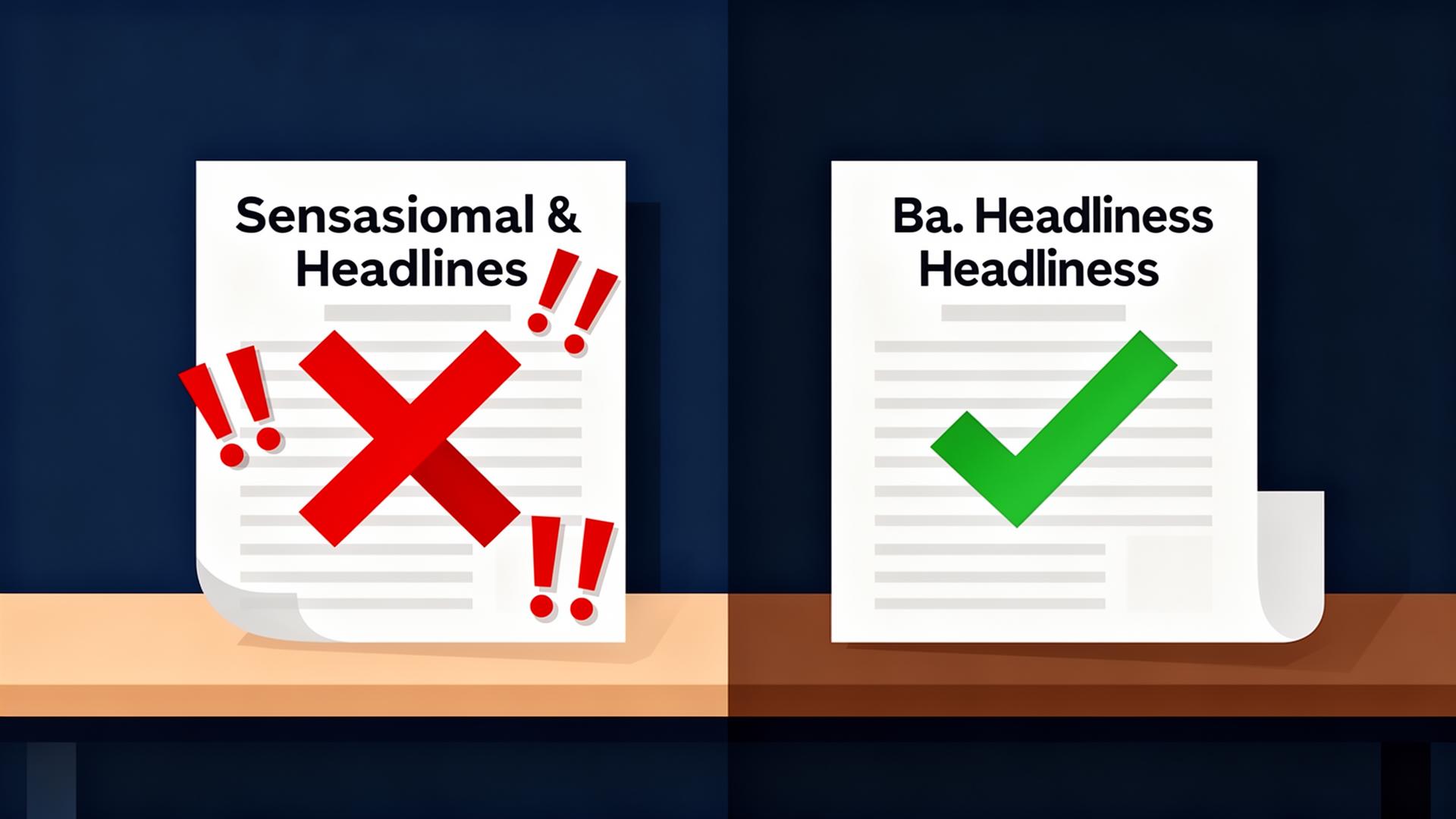
Here are headline transformations we have made across client websites:
"5 Shocking Things Your Dermatologist Isn't Telling You About Botox."
"How Often Should You Get Botox? Timing, Dosage, and What to Expect."
The first version implies the dermatologist is hiding something. The second answers a real question patients actually search for.
"The Truth About Teeth Whitening That Dentists Don't Want You to Know."
"Is Professional Teeth Whitening Worth It? Cost, Results, and How Long It Lasts."
The first version is confrontational and vague. The second tells the patient exactly what they will learn.
"This One Trick Will Make You Look 10 Years Younger."
"What Is the Best Non-Surgical Facelift Option? Comparing Threads, Fillers, and Ultherapy."
The first is a classic clickbait formula. The second is a legitimate comparison that patients search for.
In every case, the rewritten version is more likely to match what patients actually type into Google, which means more relevant traffic.
How Headlines Affect Your Meta Description Strategy
Your meta description, which is the short text that appears below your title in Google search results, should work together with your headline. The meta description should include a direct answer to the question posed in the title. This gives Google a clear signal that your content delivers what it promises and makes your listing more compelling to click on. We structure every meta description for our clients this way as part of our SEO services for medical practices.
How Doctor Rank Approaches Headline Strategy
We write and test blog headlines across over 40 medical and legal accounts. Every headline we publish follows the clear, question-based format described in this article. We track performance and adjust based on actual ranking data. Whether you are a dermatologist, plastic surgeon, dentist, or med spa, the principles are the same. Get in touch if you want us to audit your headlines.
Frequently Asked Questions
Will changing my headlines hurt my current rankings?
It depends on the current state. If your existing headline is clickbait that is already being penalized, changing it to a clear, keyword-relevant title should help rankings. If a post is currently performing well, be cautious. You can update the title incrementally, adjusting the wording while keeping the core keyword intact, and monitor rankings over the following two to three weeks.
How long should a blog headline be?
Keep it under 60 characters for the core title to ensure it displays fully in Google search results. If you need to add an authority qualifier, the full title with subtitle can run up to 80 characters, but the primary question should be visible without being cut off.
Can I use numbers in headlines?
Yes, numbers work well when they add specificity. "5 Signs You Need a Root Canal" is specific and useful. What does not work is combining numbers with clickbait language: "5 Shocking Signs" adds nothing and triggers the clickbait filter.
References and Sources
- February 2026 Discover Core Update - Reducing Clickbait - Google Search Central Blog
- Creating Helpful, Reliable, People-First Content - Google Search Central Documentation
- Google Search Quality Rater Guidelines - Google (PDF)
2026 Examples: Medical Clickbait Headlines Still Getting Penalized
Even in 2026, medical websites continue to use clickbait patterns that trigger Google's quality filters. Recent examples we have seen penalized include: "This One Vitamin Deficiency Is Destroying Your Health" (curiosity gap with no specific answer), "Doctors Are Shocked by This Weight Loss Trick" (fake authority appeal), and "You Won't Believe What Happens After Laser Treatment" (overpromising outcomes). Each of these was replaced with straightforward, patient-focused headlines and saw traffic recovery within 4-6 weeks.
The pattern is consistent: headlines that prioritize clicks over clarity get filtered in healthcare. Google's February 2026 update specifically expanded its clickbait classifier to cover Discover, Search, and AI Overviews. If your medical blog still uses sensationalized titles, the penalty now affects more surfaces than ever.
Headline optimization is one component of a complete medical SEO strategy. Learn how we help healthcare practices rank higher with content that converts.
Published by Doctor Rank. Strategies discussed in this article are based on our direct experience managing SEO for 40+ healthcare and legal practices. Google's algorithms evolve continuously, and what works today may shift with future updates. For a personalized assessment of how these changes affect your practice, contact our team.
Written by
Artem Saribekyan
Artem is the CEO and founder of Doctor Rank, a digital marketing agency specializing in local SEO and AI search optimization for healthcare providers and legal professionals. Based in New York, Doctor Rank manages SEO for over 20 accounts including personal injury attorneys, family lawyers, criminal defense attorneys, plastic surgeons, dermatologists, and dental practices.
Learn more about our team