Should a Clinic Put an AI Receptionist on the Phones Today?
Written by Artem Saribekyan, Founder and CEO of Doctor Rank. Twenty years in search marketing for medical and legal practices. Building AI search and AI receptionist systems for practices since ChatGPT launched in late 2022. Last updated October 2026.
Yes. Keep one or two people for the lobby and give the phone to AI.
What an AI receptionist handles on a clinic line, what it never does, how natural it sounds, and the cost against a $5,000 a month receptionist. Artem's position, plainly.

Artem Saribekyan
CEO, Doctor Rank
The Short Answer
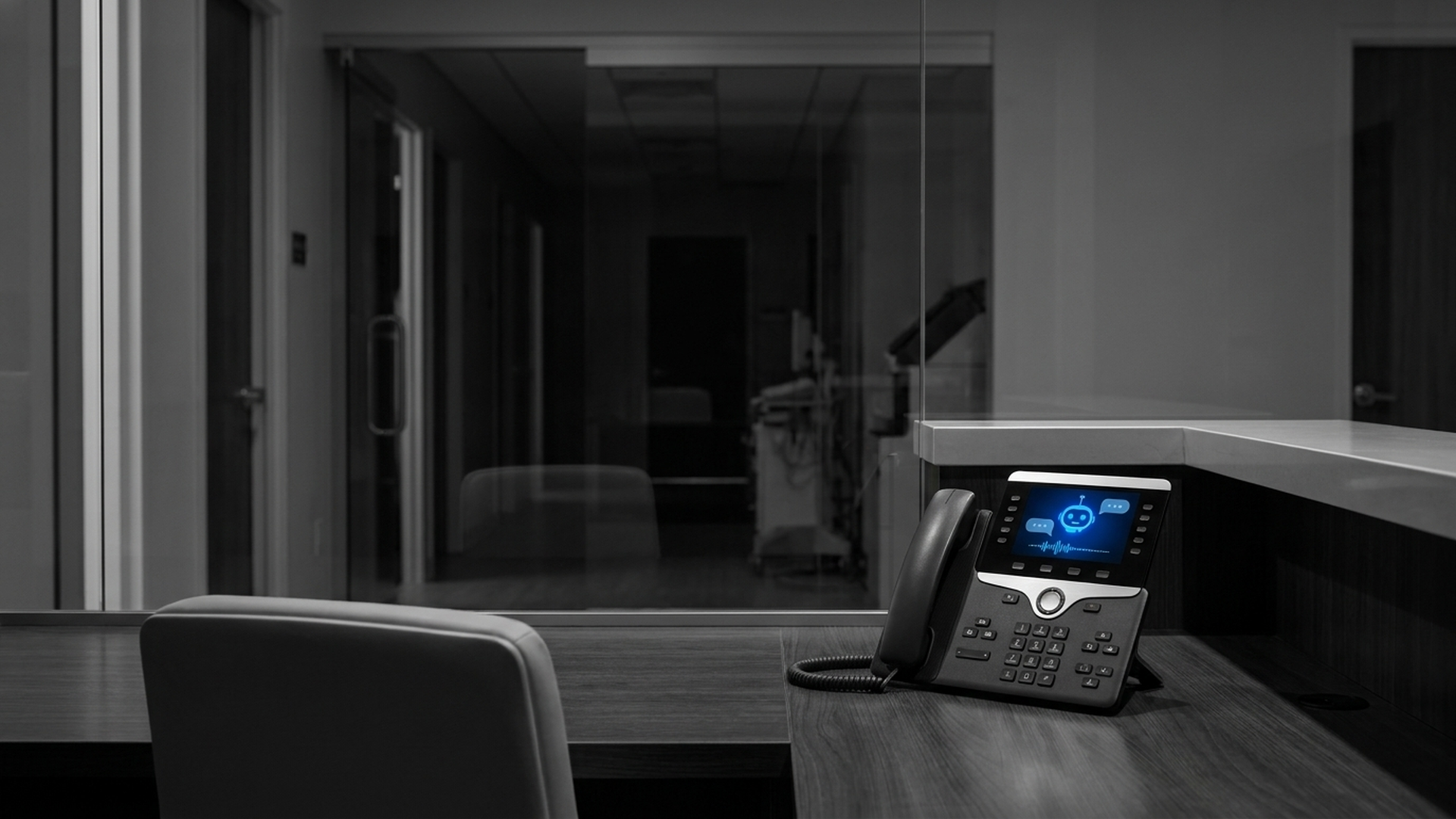
Yes. An AI receptionist can now book appointments, answer questions about the practice, speak several languages, take messages and transfer a caller to a person, and it does it in a voice some callers cannot tell from a person. A human receptionist costs a clinic at least $5,000 a month. Ours is a flat $999. Keep one or two people at the desk for the patients in the room and let AI take the phone.
Why I say yes to an AI receptionist on clinic phones now
My answer is a firm yes. The phone work in a clinic repeats itself: the same questions about hours, parking, insurance and which doctor does what, and the same booking, rescheduling and cancelling, all day. That is exactly the kind of work current voice AI does well, and it does it at 6:15 pm when your desk closed at 5 and a new patient is about to call the next name on the list.
I expect the receptionist headcount in clinics to shrink fast. A practice that runs four, five or ten people at the front desk today can, in my view, keep one or two for the patients standing in the lobby and hand the phone to AI. That is my position. Your payroll is your call, every practice is staffed differently, and you decide what the people in the room are worth to you.
What an AI receptionist handles on a clinic phone line
The list is the one your front desk works through every day. It books appointments, reschedules them and cancels them. It answers questions about the practice: hours, location, directions, which services you offer, which insurances you take, what to bring to a first visit. It speaks several languages, so a Spanish-speaking or Russian-speaking caller gets the same answer an English speaker does, without waiting for the one staff member who can help. When a caller wants a person, it transfers the call. When nobody is free to take the transfer, it takes a message and passes it to the front desk.
If a request falls outside all of that, it takes the details and routes them to the right person, the way a receptionist does with anything outside their scope.
One practical note on booking. Writing an appointment straight into a specific scheduling system over the phone depends on what that system lets outside software do. Where that door is closed, the AI confirms the details and texts a booking link, which is how a lot of patients prefer to finish anyway.
What an AI receptionist will never do, same as your front desk
It will never give medical advice. Not "should I stop my medication," not "is this rash serious," not "can I take ibuprofen before the appointment." Your front desk does not answer those either. They say "let me get a nurse" or "the doctor will go over that at your visit," and the AI is built to do the same. It gives practice information and it moves the clinical question to a clinician.
That boundary matters more for a clinic than for any other business putting AI on the phone, and it is the first thing I would test in a demo. Ask the clinical question yourself and listen to how it declines.
It also does not replace the person a patient sees when they walk in. Checking someone in, taking a copay, calming a nervous patient, handing over paperwork. That stays human.
How natural an AI receptionist sounds on the phone today
The voice has gotten good enough that some callers cannot tell it is AI. It does not read a menu. It listens, pauses in the right places, handles interruptions, and switches language when the caller does. Two years ago the giveaway was the flat cadence and the dead air while it processed. That is mostly gone.
I would still have it say it is an automated assistant at the start of the call. Patients accept that when they are told. They do not accept finding out later.
What a receptionist costs versus an AI receptionist at $999 a month
A receptionist costs a clinic at least $5,000 a month each. Five of them is $25,000 a month, and the phone is only part of what they do. Our AI receptionist is a flat $999 a month, no matter how many calls come in.
I am not telling you the math says to let four people go. I am telling you the phone should no longer be the reason you hire the fourth and fifth. Keep the one or two who are great with patients in person. Give the calls to the AI, and move the people you keep onto the work only a person can do: the patient at the window, the insurance problem that needs a phone call to a payer, the follow-up that needs a human voice from someone the patient already knows.
Online booking links and website chat went from novelty to standard
A "book online" button on a medical website used to be unusual. Then every clinic had one and patients started expecting it. Website chat went the same way. The AI receptionist is on the same path, and the only open question is whether you add it before or after the clinic down the street does.
Treat it as the third item in that set. The booking link is for patients who would rather tap than talk. Website chat is for the visitor with a question at 11 pm. AI on the phone is for the person who still wants to call, which in medicine is a lot of people, especially older patients and anyone worried about a symptom.
How to know the AI receptionist is doing its job
Put it on a tracking number so every call it takes is counted. In the first month, watch how many calls it answered that would have hit voicemail, how many appointments it booked or sent a booking link for, and how many it transferred or took a message on. If your booking confirmations fire as key events in Google Analytics, you can see booked appointments next to the calls. The number that matters at the end is booked patients. The demo call you make yourself, with a clinical question in it, is how you check that the boundary holds.
If you want to hear one take a live call, our AI receptionist is at /ai-medical-receptionist.
Common questions about AI receptionists for clinics
Will an AI receptionist give patients medical advice?+
No. It is set up the same way a front desk is: it answers questions about the practice, books and reschedules appointments, and passes anything clinical to a clinician. If a caller asks whether a symptom is serious or whether to take a medication, it declines and routes the question to a nurse or the doctor, or takes a message so someone qualified calls back.
Can an AI receptionist answer calls in languages other than English?+
Yes. Current AI receptionists speak several languages and can switch when the caller does, so a Spanish-speaking or Russian-speaking patient gets hours, directions and booking help without waiting for a bilingual staff member. The practice information it gives is the same in every language, because it comes from the same script the clinic approved.
What happens when an AI receptionist cannot handle a call?+
It transfers the call to a person at the front desk. If nobody is free, it takes a message with the caller's name, number and reason for calling and passes it to staff, the same handoff a receptionist makes when a request is outside their scope. For booking requests it cannot complete over the phone, it confirms the details and sends a booking link.
How much does an AI receptionist cost compared with hiring a receptionist?+
A receptionist costs a clinic at least $5,000 a month each. Doctor Rank's AI receptionist is a flat $999 a month, with no limit on calls. The point is not to clear out the front desk. It is to stop hiring extra people for phone work and keep one or two staff for the patients physically in the office.
Written by
Artem Saribekyan
Artem is the CEO and founder of Doctor Rank, a digital marketing agency specializing in local SEO and AI search optimization for healthcare providers and legal professionals. Based in New York, Doctor Rank manages SEO for over 20 accounts including personal injury attorneys, family lawyers, criminal defense attorneys, plastic surgeons, dermatologists, and dental practices.
Learn more about our team